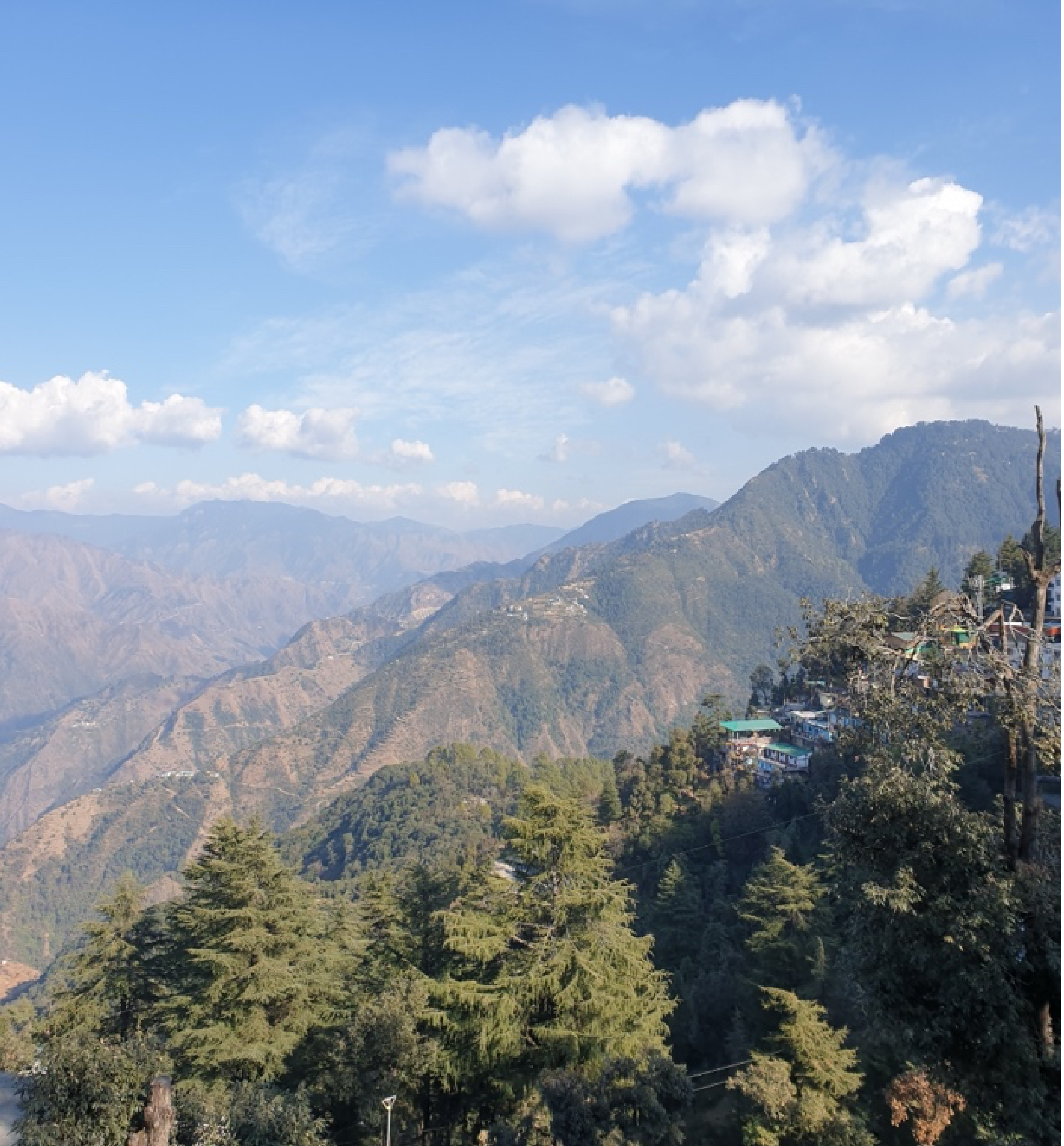
As is often the case with the
coming of a new year, Pragya UK’s transition into January is serving as an
important time of reflection! Here we’ve
had a look back at Pragya’s work and progress in 2018, as well as a moment to look
at what we hope to achieve going forward into 2019.
2018
was a busy year for Pragya’s programme in India. Our Food Security for
Himalayan Smallholders project continued to go from strength to strength,
empowering farmers to adapt their practices in response to changing ecosystems,
guided by each other as well as through services provided by Pragya-supported Agri-Advisors,
including soil testing and weather information. Farmers were also supported to
add value to their produce with services established to provide them with
information on prices, buyers and markets, in order to enhance their revenues
and help move their communities out of poverty. We trained women’s Self-Help
Groups in Nutri-dense farming and dietary requirements in order to increase
each family’s calorific and micronutrient intake, helping lift communities out
of hunger and food insecurity. Pragya UK made a field visit to project sites in
and around Uttarkashi, meeting with members of a farmers’ cooperative supported
by Pragya for local value addition and the development of ethical trading
links, and also visiting Pragya-supported crop research plots that provide
insights enabling the Agri-Advisors to assist farmers in crop diversification
and Climate Smart Agriculture.
 |
| A Schools on Wheels lesson in Bhapkund camp |
In 2018 Pragya further developed
its programme for migrant communities in the Indian Himalayas. The past year
has seen an emphasis on the importance of reducing levels of educational
exclusion suffered by children of migrant road workers, providing the basis for
our ongoing ‘Schools on Wheels’ campaign which transports learning materials
and a trained teacher to migrant workers’ camps. The classes introduce basic
literacy and numeracy and encourage both the children and their parents to
develop an interest in education, with some adult classes being run as part of
the programme. The project staff have also made progress in their liaisons with
local schools near the camps, encouraging admissions of the children of migrant
workers despite lack of documentation.
We also made significant progress
with our project establishing DMS-Himalaya, a community-led disaster
preparedness model for the Himalayan region. With the aim of increasing the
resilience of neglected communities particularly prone to natural disasters due
to the region’s unique climate and geography, Pragya have introduced the
citizen-led disaster management system in order to empower communities for grassroots
disaster risk reduction and response. In the project’s recent year, Pragya-established
Disaster Response Teams received further intensive training and orientation,
the integration of the model within existing disaster relief programmes was
heavily promoted in meetings with state government officials, and the project
was enhanced by the addition of a new element, Eco-DRR, an initiative that
incorporates community-based monitoring of ecosystem health as part of their
disaster preparedness. The DMS-Himalaya system was even successfully employed
on several occasions as a response to incidents over the year – a positive step
going forward in the development of the project.
 |
| Establishing a fodder farm at Simpani |
In Nepal, 2018 saw
the continuation of Pragya’s post-earthquake rehabilitation projects, primarily
focused on communities in the disaster-struck rural districts of Dhading and
Sindhupalchowk who continue to suffer from the long-term impacts of the
earthquake such as the loss of livestock and damages to housing, community water
sources and cultivatable land. Combatting the earthquake’s negative impact on WASH
practices in these districts, Pragya’s implementation of the rehabilitation project
included the installation of water tanks and community toilet blocks in the
regions where such facilities had been damaged, the formation of Women’s Water
and Sanitation Councils to ensure the sustainability of WASH improvements, and workshops
in schools and in the wider community to raise awareness and provide training
on community hygiene, sanitation and waste management practices. The
earthquake’s threat to Nepalese livelihoods also continued to be addressed with
repair of irrigation structures and pipelines to increase farming productivity,
as well as the establishment of community fodder farms in regions that would
benefit from shared farming space. Pragya also helped rehabilitate livelihoods,
supporting disaster-affected families with livestock and poultry packages, and providing
training in fields such as organic farming, goat rearing, and candle making. These
projects helped build local enterprise capacity for sustainable income
generation.
As part of our initiative to
combat trafficking and other gender-based violence (GBV) in Nepal, an issue
which had particularly escalated in districts where economic distress caused by
the earthquake has been highest, Pragya continued to monitor the previously
installed Women’s Helpline Centres and conducted further discussion and training
with the Women Vigilance Committees. Helpline leaders and committee members
have received further training in effective support to victims of GBV and
awareness raising of the issues within their communities. Extensive efforts
have also been made to establish linkages with police and government
departments to foster an integrated response to GBV and a comprehensive support
network for victims of GBV and those at risk.
 |
| A cultivation field demonstration session in Isecheno |
In Kenya, the
conservation and cultivation of medicinal plants in Kakamega Forest was a
priority in 2018. The initiative saw Pragya addressing the depletion of threatened
medicinal plant species by supporting Pragya-established Community Conservation
Groups educating them on the importance of local biodiversity and building grassroots
capacity for species identification, habitat monitoring, data collection and
analysis. Awareness campaigns were also run in schools where children were
encouraged to participate in conservation efforts and feed information learnt
back to their families and peers, ensuring a greater scope of impact as well as
the sustainability of the project. Pragya also expanded its earlier established
plant nurseries in 2018, building propagation sites for important endangered
medicinal plant species as a crucial conservation effort as well as a means of
income generation for families within the community.
As for 2019… our commitment to transformational
change for the communities with which we work of course lives on. Our efforts
to strengthen community disaster preparedness remains a priority, with a view
to the regional expansion of our work and the adoption of the latest
appropriate and affordable disaster management technologies. We will
significantly expand and enhance our Food Security work, helping secure the prosperity
of smallholder farming communities in the face of climate change. We remain
committed to serving the needs of highly disadvantaged ethic minority and migrant
communities, supporting their access to education, health care, and rights, towards
a brighter future.
Our gender programme in 2019 will
continue to challenge the many forms of violence against women that persist
across the regions in which we operate, including work in south Asia to tackle
the regionally-interconnected trafficking of women and girls for sexual
exploitation and bonded labour. We will be exploring partnerships to further our
maternal and reproductive healthcare work, working to improve the accessibility
and capacity of community health services, helping to combat the appalling
maternal and infant mortality rates commonly found in the marginalised and last
mile communities that Pragya serves. Pragya will also strive to enhance access
to safe water and quality sanitation in desperate communities deeply impacted
by climate change, providing a vital lifeline in harsh environments and
combatting the spread of water-borne diseases. We remain committed in 2019 to
supporting the development of sustainable, culturally-appropriate livelihoods
for those most desperately in need, with an emphasis on below-poverty-line and
female-headed households. Our work in conservation will see neglected
communities supported to conserve local biodiversity and protect habitats from
anthropogenic pressures, through a combination of awareness-raising, community-led
habitat monitoring, and advocacy. We will also support energy-deficient and
under-electrified communities meet their energy needs by empowering communities
to adopt and manage clean, off-grid energy technologies, which in turn will
positively impact community education, healthcare and economic wellbeing.
 |
| A flood affected Chars Community |
2019
will also see the expansion of Pragya’s work in Bangladesh. Pragya has recently
established its programme with the vulnerable communities of the Chars, or
River Islands, in Bangladesh with the aims of enhancing disaster resilience,
improving the standards of WASH and livelihood capacities, and empowering women
and girls for their protection from trafficking and other gender-based
violence.
This is just some of the vitally
important work Pragya is committed to in 2019. Everything we do is only made
possible through the generosity of our supporters. If you’d like to make a
contribution to our work and join us on our journey, please visit https://www.pragya.org/donate.php
- Thank you so much.