Showing posts with label Education. Show all posts

26 July 2016

Bringing Digital Literacy to Kenyan schools


“We have no reason anymore not to improve our grades, because now we are better equipped, even more than our neighbouring schools who have been outperforming us” said Boniface Nakori, the head teacher of Sionta Primary School in Samburu County. The school, which was constructed in the middle of a pastoral zone, did not have many facilities, until recently. It is a similar story in the neighbouring Turkana county, where many schools do exist, but with inadequate facilities. One of the tenets of providing a basic education is accessibility, but if the education that we provide our children is to be meaningful, there has to be an equal emphasis on quality. And today, providing quality education also means ensuring that children are not left behind on the rapid strides made in the digital age.

Under its Education Resource Centre (ERC) project, Pragya conducted training across seven schools, in Samburu and Turkana counties in Northern Kenya, and provided schools with digital learning equipment and teaching learning materials (TLMs). The provision of DVDs and other materials ensures that quality education is delivered to the students. In many schools, the system was already in operation for sometime now, and the feedback from the students was enthusiastic. In the Kapua Primary School, the TVs had been linked with satellite television, enabling the school to tune into education programs. Mrs. Kerio, a guidance and counseling teacher in Nakwamekwi School, found the material useful in teaching the students about sex education, especially the symptoms and effects of various sexually transmitted diseases. The teachers found the materials immensely helpful in teaching science subjects that tend to require a lot of illustrations, which was made easy; and in some instances, the project helped the students who had never used laptops to do so. One of the outcomes of the project is that it familiarizes the students with digital materials, providing them with the necessary skills and confidence to function in the digital age.


16 May 2016

Accountability in Education: An introduction to the DEISPI system


The introduction of successive acts for education reform in India, most notably, the Sarva Shiksha Abhiyan (SSA) in 2002 and the Right to Education Act (RtE) in 2009 has led to increased access to elementary education in the country. Gross Enrollment Rate (GER) has increased, the gender gap between boys and girls in primary schools has been reduced, and schemes such as the provision of mid-day meals has ensured that the children stay in schools.

While this looks good on paper, it is a generally known truth that the quality of education imparted in most of our schools continues to remain sub-par. An assessment by the non-governmental organization Pratham revealed that 40% of students in Class 5 are unable to read a book prescribed for Class 2 students. 57% of the students are unable to solve arithmetic sums prescribed for a Class 2 student.

According to a 2007 report, of the 294 districts identified as educationally backward, 135 are Tribal, Border, Hilly and Forested districts (TBHF). In a bid to improve the quality of education in these districts, Pragya has piloted an Education Management Information System (EMIS) across 330 schools in 11 TBHF Districts in the region. Although various EMIS already exist, we developed a Dynamic Education Information System for Planning and Improvement (DEISPI) suited to the needs of these remote regions.

What is DEISPI?
Simply put, DEISPI is a set of data collection tools that enable us to evaluate the schools across three parameters: student development, quality of instruction, and school operations and management.
Student Development is measured in basic literacy, basic numeracy, basic cognitive skills, social behavioral development and emotional behavioral development. This is compared to a level considered the basic or standard for the age.
Quality of instruction is based on the response of the students and parents and is measured in instructional clarity, knowledge of the subject etc.
School Operations and Management quality is gauged by finding out whether the institution meets the basic minimum level of physical infrastructure, whether it has separate facilities for Children with Special Needs (CWSN), availability of Teacher Learning Materials etc.

The Bare Foot Monitors (BFM) trained for the purpose enables the collection of data. Workshops are conducted at the district level with the help of the District Education Office and monitoring through the Village Education Centers (VECs) The data collected with the help of the community helps in monitoring the quality of education in schools across the target district.

Case study
Rudraprayag, Uttarakhand, one of the two districts in the Himalayas where the DEISPI project is currently running, has some of the highest literacy rates in the country. According to the 2011 census, the literacy rate for Rudraprayag is 81.30 %, against the state average of 79.63 %, and well above the national average of 64.8%. Uttarakhand ranks among the top ten states when it comes to literacy levels in the country.

In a district level discussion held at Rudraprayag, where the DEISPI is being piloted in 30 schools, a number of issues were brought forth. The need for at least one residential school for Children with Special Needs (CWSN) was felt. Besides calling for a greater involvement of the parents in the school system, the assertion was made, contrary to popular belief, that the teachers at the private schools were generally more qualified and better trained than the teachers at the government schools. In the meetings held at the Village Education Councils (VECs) the villagers asked questions about the infrastructure of the schools, the quality of instruction, the student-teacher ratio etc.

During the assessment by Pragya, we learnt that many schools face issues that affect the learning of the students. One school, which stood out from the rest, is the Government Primary School in Khat village, Ukimath. The school, which has 35 students and one teacher, was holding its classes in a nearby lodge after the original school building was damaged in the 2013 floods that hit Uttarakhand. Despite the adverse circumstances, the teacher was very supportive, and the school emerged with high scores across all parameters. The parents of the students, concerned about the learning levels of the students, were enthusiastic in their participation and support of the DEISPI program. The team at Pragya advised both the parents and the teachers on ways in which to increase the learning levels according to the DEISPI parameters.

The Public Education System in India, particularly primary education, is one of the largest and most complex in the world. What the DEISPI does, by making the various stakeholders: students, parents, and teachers part of the system is to make the education system more accountable.

9 May 2016

Education in the Himalayas


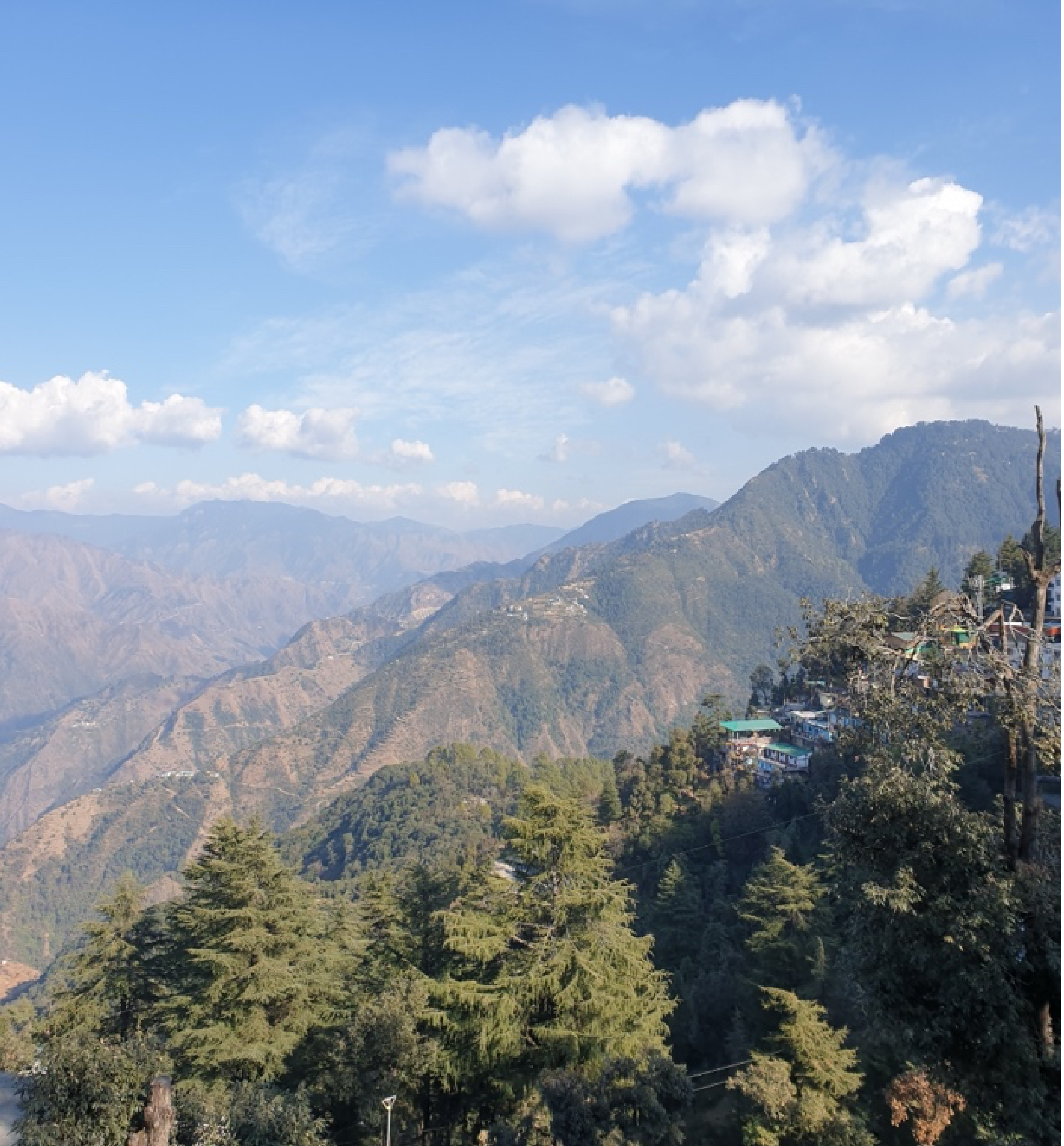
In 2014, efforts to build and maintain strategic roads in the areas along India’s border areas were ramped up. In the remote and hilly regions of the Himalayas, the roads are usually shut during the winter, and when open, the elements and the terrain often conspire to cut off access.

Most of the laborers who work on the roads are migrants from the plains. It is a matter of irony, then, that the children of those who work to improve and maintain connectivity to these remote regions have little or no access to education themselves. While most children are enrolled in the local schools, the itinerant nature of the workers’ lives leads to a large percentage of children dropping out of the schools altogether.

At Pragya, we believe that if you cannot reach the schools, then the schools must come to you. Mobile Education Units (MEUs), popularly known as ‘My School on Wheels’, are vans equipped with digital equipment, and specially designed material by the folks at Jodo Gyan.  These vans are working to improve basic literacy in these regions.


The strategy of our ‘My School on Wheels’ is multi – pronged: to operate a Basic Minimum Literacy program for children and adults, while encouraging the children to enroll in the local schools and minimizing the drop out rate. Simultaneously, Pragya is also in the process of promoting health and safety awareness among the migrant laborers. Members from Pragya act as facilitators between the employers and the laborers, conducting campaigns and holding awareness camps about basic health and safety standards. Two ‘My School on Wheels’ are already operational in Kinnaur, Himachal Pradesh and Chamoli, Uttarakhand, serving a total of 12 migrant camps in both the districts. So far, 78 sessions have been conducted and 148 children have already enrolled in the program.

18 March 2016

Improving access to quality education for pastoralist communities in Turkana county (northern Kenya)


Thomas Cook Children's Charity supported Pragya on a project establishing Education Resource Centres equipped with learning aids; audio visual and ICT equipment; in selected schools in Kenya. The project aimed at improving access to quality education for pastoralist communities in Turkana county (northern Kenya). The support received from TCCC was utilised for establishing 6 Education Resource Centres, equipped with quality educational material and equipment, to improve both teaching and learning in these disadvantaged areas, with a particular focus on girls.

Case Study - Canan Primary School


In 2011, Canan primary school was established to cater to the educational needs of the children from the growing IDP (Internally Displaced Persons) families. With 930 students and 14 teachers today, 95% of the school’s population (both teachers and pupils) comprise of IDPs. When Pragya Kenya visited the school, Mrs. Clementina Naita (shown addressing her pupils in the picture below) who is the head teacher termed the visit as “Timely and God sent”. 


She expressed how her school was deficient of basic amenities such as books and furniture. “I have no idea how to express my gratitude to both Thomas Cook Children’s Charity and Pragya Kenya for assisting Canan Primary school with materials that we’ve always wished to have but could not afford” said the head teacher. “My students now have an opportunity of getting exposed to a computer and learn how to use it at an early age” Mrs. Naita added. 


Students could not hide their excitement on receiving books, computer, a TV set and furniture. “Hiyo ni yangu!!  Hiyo ni yangu!!” (That one is mine! That one is mine!!), some younger children could be heard shouting while pointing at the computer and TV set.  Other teachers present also added that the material provided were very important to them as well because by watching, comprehension and retention capacity among the students would improve significantly. The teachers promised that they would make good use of the materials and take good care of them at all times.

Some of the happy moments...


  When Old Patterns Stop Making Sense: Shifts in Western Himalayan Plant Assemblages, 2020-2024 by Sudipto Majumdar, Pragya T...