Showing posts with label climate change. Show all posts

3 September 2016

Agriculture Research at the grassroots: practices to adapt to climate change.


Gyan Kumari is a farmer from the Dako village in Kinnaur, from the state of Himachal Pradesh, which, along with the state of Kashmir, is famous for its apples. Ms Kumari's family has traditionally derived its income from apple orchards and barley crops, but of late, the there have been drastic changes in her livelihood. “Many apple trees have perished. The treatment we applied to protect these trees after consultation with the horticultural department has also failed” she says. 

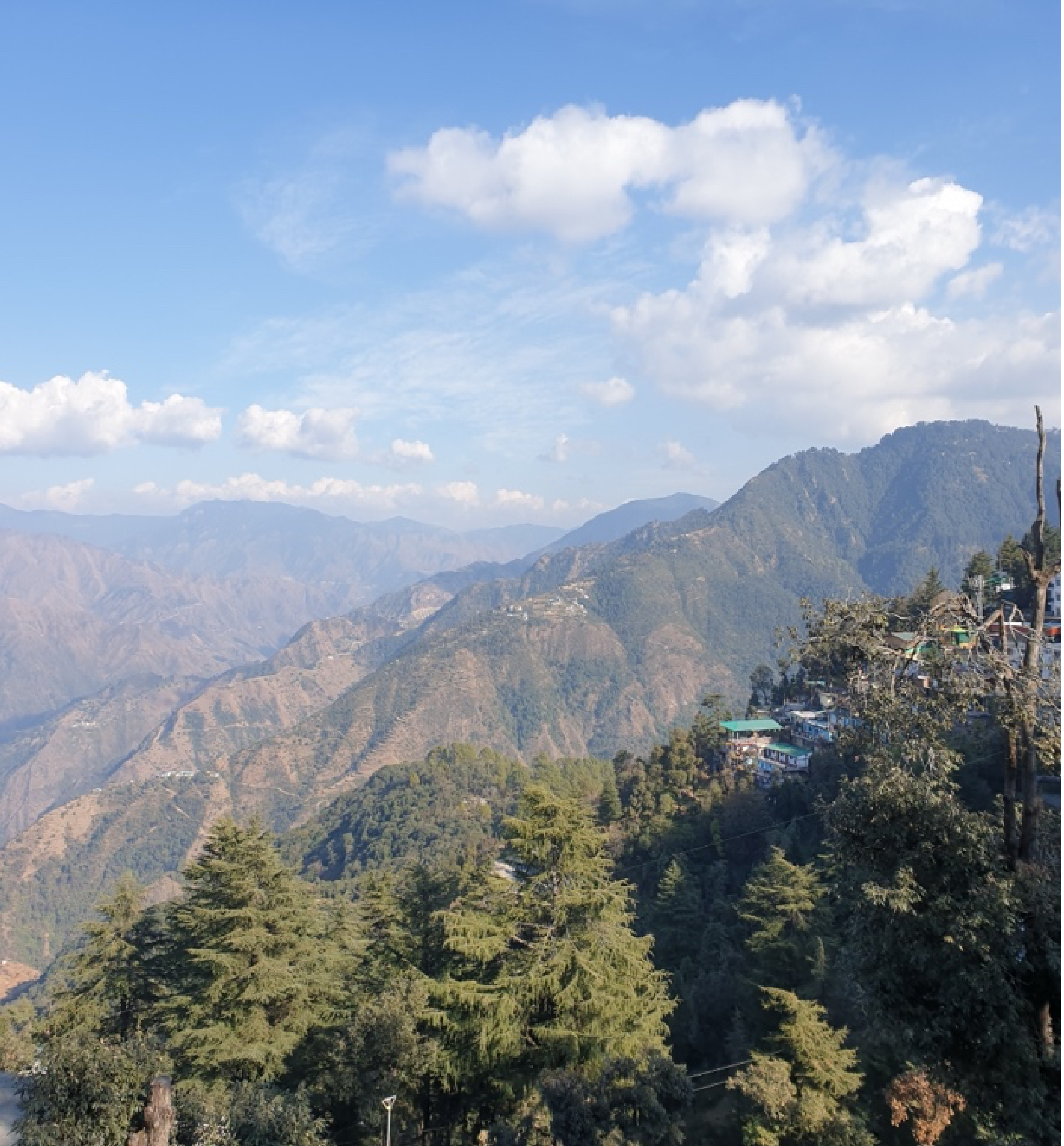
The dwindling harvests of fruits can be directly attributed to one major factor: rising temperatures due to climate change. Fruit and Nut trees require a minimum period of cold weather – termed a chilling requirement – after which the fruit-bearing tree will blossom. An insufficient number of 'chilling hours' (essential for fruit and nut trees to break dormancy)  due to  rising temperatures around the globe has had an adverse impact the harvests of the horticultural harvests.  In the states of J & K, Uttarakhand and Himachal Pradesh in the Himalayan region in India, rising temperatures could directly affect the livelihoods of farmers from the states who primarily grow ‘stone fruits’ – apples, peaches, and apricots. 


 As part of a program to help farmers adapt to climate change and adopt 'climate-smart' practices, Pragya has helped the local farmers establish Research and Development (R&D) plots to test the viability of cultivating crops like lettuce, broccoli, celery, asparagus, among others, as an alternative or supplementary crop. The R & D plots provide crucial data about conditions that are essential for an ideal harvest, and allows for experimentation with innovative cultivation and irrigation practices. There is also a decentralized system where the farmers are encouraged to take up the cultivation of various crops, and their  plots serve as a demonstration that various crops can be successfully grown in the harsh climate of the high-altitude regions: an invaluable tool to persuade the local farmers to grow the traditional crops from the plains.

Pragya is working with farmers on the R & D plots in five districts in the Himalayan states of Himachal Pradesh and Uttarakhand in India. 


20 August 2016

World Humanitarian Day 2016: challenges across the globe

The World Humanitarian Summit held in Istanbul, Turkey in May earlier this year brought together politicians, civil society groups and aid organizations to address the challenges that the global humanitarian agencies face. The Secretary General of the United Nations, Mr Ban Ki-moon structured the summit around five key agendas: “ending conflict; respecting the rules of war; leaving no one behind on the sustainable development agenda; working differently to end need, and investing in humanity.” The summit comes at a time when the wide displacement of people due to conflicts in Syria, Yemen and Iraq, has led to a global refugee crisis, and has become a contentious issue in the politics of the Global North. Equally worrying is the targeting of aid workers in conflict regions, in direct contravention of the International Humanitarian Law.

In other parts in the world, large-scale disasters are are increasingly complicit with a volatile regime of climate change. A prolonged drought in Central India leading to a water crisis and subsequent farmer suicides was immediately followed by large-scale flooding in the North India, primarily the states of Assam and Bihar, with over 4.2 million people affected. In June, heavy rains in the mountain regions of Uttarakhand and Himachal Pradesh in India caused entire villages to be washed away.


When taken as a whole, the picture of the humanitarian crisis that emerges is of large-scale displacement due to political conflicts and war, and the incipient humanitarian crisis of developing countries that are increasingly affected by disasters and climate change. Yet, in the vitiated political discourse and the partisan response to the global refugee crisis, it is the poor, marginalized, and vulnerable sections of society - women, children, tribal communities - that are most affected. Across the globe, international organizations face challenges in responding to crises, whose roots are often political in nature, and the inability to deal with events that transcend national boundaries. A divided response from the global community in the face of any humanitarian crisis, whether caused by political conflicts or natural disasters, denies the shared humanity and the common kinship that people share with each other.


20 July 2016

Engendering Change - Himachal's first solar wind power plant


A recent agreement signed between the Himachal Pradesh State Electricity Board and Solar Energy Corporation of India (SECI) will see a 2.5MW solar-wind hybrid power project being set up at Rangrik, Kaza in Lahaul & Spiti district of Himachal Pradesh in India. The solar – wind hybrid plant, to be commissioned by 2017, is part of an attempt by India to transform its energy sector. In the recently concluded Paris Climate change agreement, India has agreed to generate 40% of its total energy from renewable sources by 2030.  By 2022, India is looking to add 175,000 MW of clean energy, of which solar and wind energy are estimated to constitute 10500 and 52500 MW, or 90% of the total output.

Besides the ostensible benefits of clean energy, localized energy generation has a huge impact on the lives of people living in remote rural communities, where reaching traditional grid based power is a challenge.  Pragya’s foray into providing clean energy to the people in remote communities was through a pilot solar – wind hybrid system in Lossar and Youche villages in Lahaul & Spiti, and the Shyaso village in Kinnaur, both in Himachal Pradesh. Lahaul and Spiti is part of the larger cold desert region in the Himalayas, a sparsely populated region with a huge renewable energy potential.

As part of our efforts to increase the use of renewable energy in the area, Pragya worked closely with the village members and district officials, training the people in the use of renewable energy technologies, and using the pilot project to encourage more districts to use renewable energy to generate electricity. As part of the advocacy efforts, at the national level, we organised a workshop on “Accelerating Renewable Energy Deployment in Rural Himalayas” in July 2015, at the India Habitat Centre, New Delhi. Dr. Ashvini Kumar, the Managing Director, Solar Energy Corporation of India (SECI) was the chief guest of the event.


10 November 2014

Reaching out to people in flood hit Jammu & Kashmir

Pragya is currently working to respond to the needs of the affected people in the Himalayan state of Jammu & Kashmir that has been devastated by one of the worst floods in 103 years. With our field officers coordinating efforts from Srinagar and Jammu, Pragya is reaching out to flood-victims in Jammu, Reasi, Kulgam, Srinagar, Pulwama, Budgam, Anantnag, Baramulla and Bandipora districts, which are among the worst affected. (View map)


Our sincere thanks to Aarti Drugs Ltd., Agility India Pvt. Ltd., Amdocs Information Security, BP Foundation , Chambal Fertilisers & Chemicals Ltd, Crompton Greaves Ltd, Godfrey Phillips India, Happy World, Hitachi India Pvt. Ltd., Indian Cultural Exchange - Emory University, Atlanta, Georgia, USA, InterGlobe Aviation Ltd-IndiGo, Jet Airways (India) Ltd, Paul Wurth India, Perfetti Van Melle India Pvt. Ltd, SpiceJet Ltd, Vestige Marketing Pvt. Ltd., Young Managers Forum - JK Lakshmi Cement ltd. and all individual supporters who have helped us reach out to those in need. 

Thanks to our supporters, we have reached 9954 items of hygiene kits, 282 packs of baby food, 914 nutrition-packs for children, 102 medicine kits and bulk quantities during health camps, 13332 kg food grains and spices, and 330 ltr of cooking oil,8287 packs of ready-to-eat food items, 1949 blankets, 160 sets of utensils/emergency lights, 2148 ltr water and 22040 water purifying tablets, 914 warm wear kits for children, so far. Current efforts are focused on addressing needs for warm wear before winter sets in. (Read more about our outreach)

To join our efforts, please write to: research@pragya.org or call +91 9810188066.
(More information)

22 September 2014

Pragya joins The People's Climate March


The People's Climate March was one of the largest activist event in recent years to advocate global action against climate change that took place on Sunday, September 21, 2014, in New York City, USA. Pragya's Research & Advocacy and Communication & Engagement team members joined the Climate March held in New Delhi, India, Saturday, September 20, 2014, anchored by 350.org India. They joined thousands of college students, children, civil society representatives, and members of communities affected by disaster/climate change. The team carried its banner raising concerns regarding the frequent high impact natural disasters in the Himalayas and were at the forefront of the procession from Mandi House to Jantar Mantar. (More info)

16 June 2014

E-book published - DMS-HIMALAYA

In June 2013, high-intensity rain and cloudbursts in the Indian State of Uttarakhand in the Himalayas triggered a series of hydrologic and geologic disasters, including glacial lake outbursts, landslides and flash floods, affecting more than 2,036,000 people and leading to one of the worst catastrophes of the decade. 

One year on, as the country still grapples with the calamitous event and its aftermath, in DMS-Himalaya, Banerji, Ipe and Basu through first-hand observations, vividly recapture the cascading combination disaster that occurred and the event trajectory. The book also examines the response process to the disaster, what worked and what did not. The learnings, from pre-event stages to post-event response, are drawn out with consideration of the complex interlinked issues related to disaster response in remote locations with fragile ecologies, and have been woven into a fortified disaster management system for the Himalayas.

  When Old Patterns Stop Making Sense: Shifts in Western Himalayan Plant Assemblages, 2020-2024 by Sudipto Majumdar, Pragya T...