In
ancient times, a scapegoat was an animal on whose back the sins of a community
were placed, and was cast out in the desert, which is where the term
scapegoating comes from. One of the forms in which this practice continues to
live, is witch hunting, still prevalent in parts of India today. In the
hinterlands of the country, it is convenient for the community to transfer its
misfortunes on those already at the margins: widows, unmarried or old women.
According
to the most recent report of the National Crime Records Bureau (NCRB, 2014),
out of the 156 murder cases relating to ‘witchcraft’ reported in the country,
47 were from Jharkhand. The report does
not include cases of violence not resulting in murder or the social death that
the victims accused of witchcraft suffer. Witch-hunting is mainly used as a
pretext for rape or grabbing property, but sometimes illness or sudden death of
people or livestock can also trigger the anger of the community.

Speaking
at the inauguration of the Pragya Sashaktikaran
Kendra – Empowerment Centre (EC) – in Ranchi, Dr Mahua Manji, Chairperson
of Jharkhand State Women’s Commission, said, “witch-hunting mainly occurs due
to health issues in the community”.
In
the rural areas of Jharkhand and other states, people rely heavily on Ojhas, or spiritual healers or
exorcists, in spite of the presence of Primary Healthcare Centres. A lack of
understanding of basic health issues and formal healthcare contributes to high
mortality rate from diseases, and the Ojhas,
with no formal training in medicine, are often the ones to brand and therefore instigate
the violence against the ‘witches’.
Punam
Toppo, a social activist who has been campaigning to prevent Violence Against
Women (VAW) for more than a decade, has felt the effect of this violence first
hand. Her grandmother, under whose care she grew up after her parents passed
away, was accused of being a witch; the family was designated a social outcast
and was forced to move out of the village. Ms.
Toppo is associated with the Association for Social and Human Awareness (ASHA),
which works for the empowerment of women in the grassroots. Pragya has
partnered with ASHA in Jharkhand, and together we have formed Women’s Peer
Groups (WPGs) in 10 villages in Ranchi district, raising awareness about the
basic issues of health, nutrition and women’s rights.
Pragya has also established an Empowerment
Centre in Tezpur in Soniptur district of Assam. The state, which passed legislation
against witch hunting in 2015, has been in the news for the high prevalence of
witch hunting practices. Our project in Sonitpur covers a total of
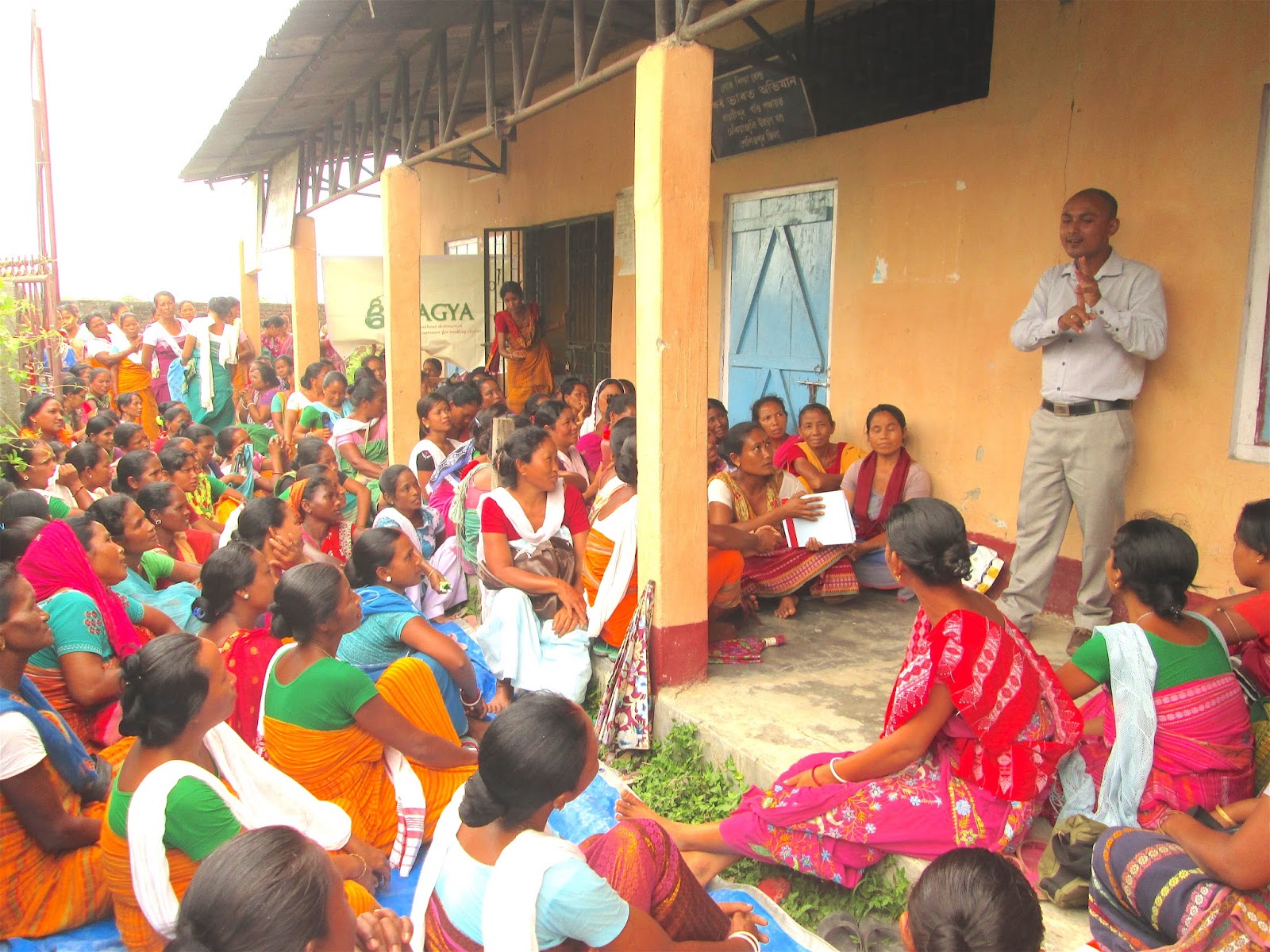
10 villages in the Dekhiajuli and Chariduari blocks. The formation of the WPG
in Batachipur village saw the participation of upwards of 100 women. We received
an enthusiastic response from Ghargra Kachari, Gormara Kachari, and Shantipur villages
in Dekhiajuli block and Bogijuli village in Chariduari block.

Pragya
has expanded its presence to Jharkhand and Assam with the establishing of these
ECs and will be moving to include Bihar shortly. This is part of a joint
project with the UN Trust Fund to End Violence Against Women (UNTF), and will
cover ten districts in five states of Assam, Bihar, Jharkhand, Himachal Pradesh
and Rajasthan.