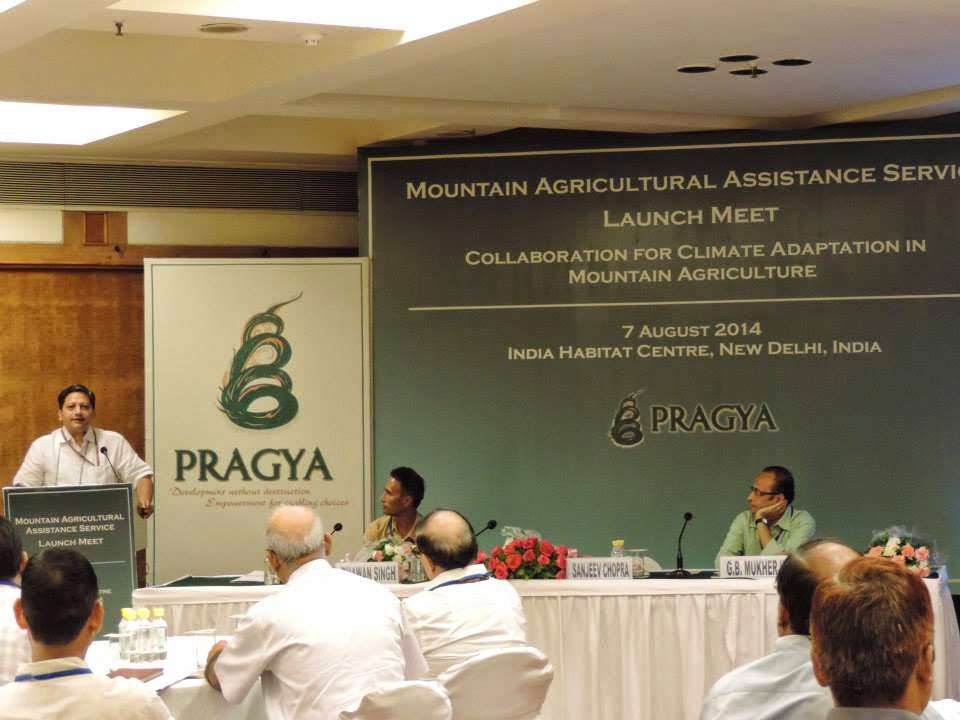
The multi-stakeholder consultative workshop on DEISPI (Dynamic Education Information System for Planning and Improvement) ~ An Education Management & Information System for Tribal, Border, Hilly, Forested (TBHF) Districts in India was held on 5th November 2014 at India Habitat Centre, New Delhi,India. The workshop was supported by USAID under the 'All Children Reading: A Grand Challenge for Development' initiative, and was conducted by Pragya India. The event shared the learnings from the successful piloting of DEISPI with stakeholders in other educationally backward TBHF districts across India, as well as at the national level, and facilitating its uptake and implementation. The event sought to draw together national, state and district level institutions, governmental and non-governmental, involved in education delivery, with particular focus on TBHF districts, as well as educationists concerned with education policy, research, teachers' training and curriculum development to fine-tune the EMIS.
 Along with the Guest of Honour, Prof. Peter Ronald deSouza (Senior Fellow - Centre for Study of Developing Societies, Board Member - NUEPA) and Distinguished Guest Dr. Huma Masood (National Programme Officer - Gender & Education, UNESCO), the workshop had participation from institutions involved in education delivery, with particular focus on TBHF districts as well as educationists concerned with education policy, research, teachers’ training and curriculum development. Participation was elicited from national and international institutions such as NUEPA, ACER, SSA Missions and State Education Departments, Ministry of Tribal Affairs and Institutions (SCERTs, SIEs, DIETs), District Education Departments and institutions hailing from TBHF districts. The event also provided the opportunity for key stakeholders from the 11 piloted districts, to share their experience and concerns in implementing DEISPI.
The participative process brought out the need for modification in DEISPI Tools / Process / Methods of data collection and dissemination in TBHF districts across the country. Recognising that all TBHF districts are not alike , the participants of the workshop were divided into 5 working groups: TBHF with positive socio-political status, Border/peripheral TBHF, TBHF with chronic poverty, TBHF near mainstream economy and TBHF with significant socio-cultural barriers. The Chairs presented the results of the deliberations at the end of the session. (Glimpses from the event)