Showing posts with label hilly. Show all posts

10 April 2018

And this time it is Strawberries in the poly houses of Nepal

Maya Tamang a 40 years old woman lives in Gamailo and was selected as one of the farmers for poly house beneficiaries in Nuwakot district of Kakani Gaupalika. Maya has a family of 7 members and has 2 children. Being illiterate, Maya Tamang did not have enough alternatives for livelihood which made her a potential beneficiary and work as a farmer for poly house in Nuwakot District of Kakani Gaupalika.

Looking at the development indicators of life of villagers, Pragya implemented the project called “Improving Rural Livelihoods, Water & Sanitation in Earthquake Damaged Areas of Nepal” where a holistic rehabilitation programme is being delivered in Nepal. Current interventions are aimed at addressing critical needs of poor households affected by the earthquake in four disaster-affected districts in Nepal. The interventions are focussed on water and sanitation, short-term income generation, long-term livelihood development and protection of women from gender-based violence.

Selected as one of the livelihood package beneficiaries under the project, Maya decided to take this opportunity in the hope of providing better support to her family. Under the project staff’s supervision, she adopted poly house for strawberry production. After receiving support for the polyhouse like silpaulin sheet and bamboo, she zealously spent her time on the construction of poly house. Furthermore, the number of training she received from other organization during the previous year helped her to implement the technology, appropriately.

Maya Tamang in her polyhouse where she has planted strawberry
The variety of strawberries cultivated in Nepal requires an altitude of 1500 - 2500m with a temperature range of 4 - 25 degree Celsius and 3000 - 4000 ml of rainfall, making Kakani the ideal location for such cultivation. The preparation for strawberry cultivation begins around the month of June. After the months of tending, the actual plantation is carried out during September and the produce is ready by November.

Before planting strawberry in poly house, Maya Tamang used to cultivate maize in her farmland. During that time the income she incurred was very less which was not sufficient for her family. But after the strawberry cultivation in the poly house, she is able to have a good yield. In Maya’s words, it was not only her effort alone, her family members have also contributed equally to the cultivation of the strawberries. They helped in watering the plants and put fertilizers and nutrients regularly in the soil. Maya has already sold about 100 kg of strawberry this season and earns 30,000 INR and is still selling the strawberries. Her target is to achieve an income of 1, 50,000 INR. She is happy and satisfied with what she has gained and wants to work harder to make more money from the strawberry fields.

Strawberry in Maya Tamang's polyhouse
“We have seen difficult times when we did not have money to pay for children’s school books for school. Now life has become easier as we are able to manage our daily expenses smoothly,” says Maya Tamang.


Together, Maya and her family have planned to save half of their income for their children’s education and invest the other half to buy food grains that will keep them secure for the entire year. She wants to bring women in the community together, who are interested in strawberry farming along with her and are willing to develop micro-entrepreneurs so that the women in that area do not have to migrate to other places in search of work which will also help in stopping human trafficking in this area.

22 August 2017

Safety gear distribution to migrant construction workers

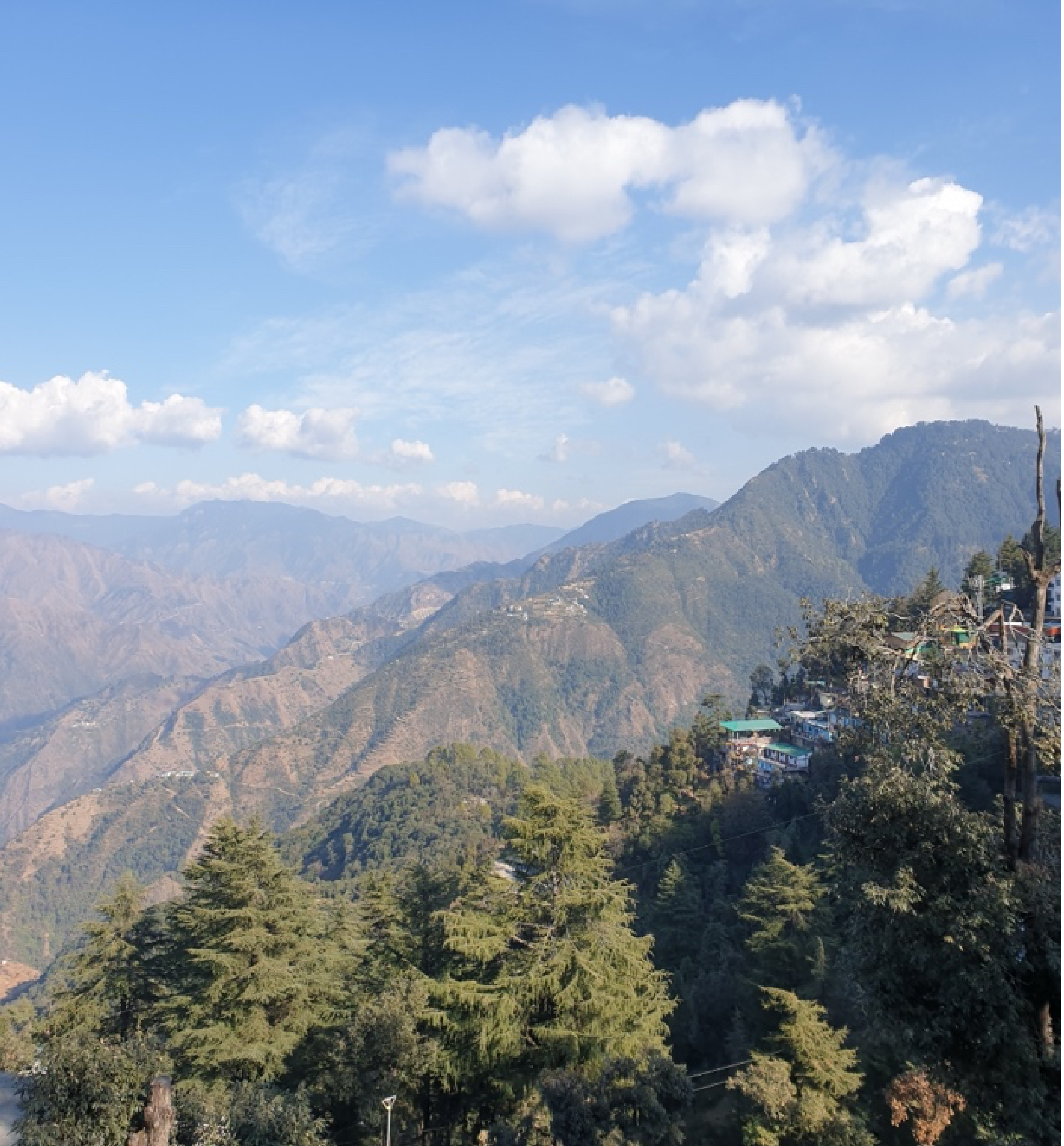
The Himalayan district of Chamoli, Uttrankhand, India is a breathtakingly beautiful place. Over the years it has become a dwelling area for migrants hailing from states like Bihar, Jharkhand and the neighboring country of Nepal.  They carry a lot of hopes and expectations to live a better life for themselves and their family. But unfortunately, safe enabling living conditions to the workers here are limited. They live in shabby, cramped, unsafe homes in unhygienic conditions, and face painfully cold and harsh weather more often than not. To add to this, they often end up working in exploitative and hazardous working conditions.
Migrants working here face more than just the physical strain but are also plagued by a variety of health implications ranging from weakness, back and joint pain to concrete burns, cuts, as well as chronic illnesses such as COPD and TB. While working, they are exposed to dust and asphalt fumes without protective clothing, naturally leading to endemic health issues including eye, heart and lung diseases. The construction workers especially women suffer through skin diseases and infections. At times children are also present at the worksites, who are more vulnerable to catch common illnesses and infections compared to adults. Unfortunately, none of the authorities are interested to hear their health concerns and provide a solution. 


We regularly face sliding rocks and mud. Many times we have suffocation and allied breathing problems due to sudden inhale of mud. To protect from mud we use homemade mask, mainly consisting of handkerchief or piece of cloth. This is insufficient as we feel suffocation after few minutes and remove them afterward. Some of us have reported coughing problems. Doctors at GREF has also advised us to wear the mask and protect from inhaling mud particles.” Says Gulu Marik, 25 years working in Malari Camp.
Pragya did a study of the hazardous work conditions and activities of the migrant workers in Chamoli. It was assessed that workers are not really provided with the necessary equipment while working in risky conditions which makes them vulnerable to various harmful health hazards as mentioned earlier. In view of that, the safety equipment distribution drive was planned, intended to reduce the mal-effects of occupational hazards and to ensure that they are able to protect themselves from other health hazards.
Pragya distributed safety kits and first aid kits to the migrant workers across six camps of migrant workers in Chamoli district of Uttarakhand. The camps covered were in Birajkund, Birahi, Surai Tota, Long, Bhapkund and Malari. The workers were trained on health and hygiene, safety and first aid.
Reaching out to and training 578 migrant workers happened in an organized way. 600 safety kits and 12 first aid kits were distributed. Workers were provided with protective gear that includes vital protective and safety equipment like helmets, gloves, along with the relevant demonstration. The first-aid kit includes the necessary health equipment and medicines in case of an injury and burns. Through a session on health and hygiene workers were made aware of health risks and the role of personal hygiene in preventing certain illnesses. Since dwelling spaces in these areas are unhygienic and open where awareness on these issues becomes a necessity. Hence workers were also informed on the symptoms, preventive and protective measures for diseases like TB and HIV. The workers many a time know the safety rules at a workplace but they seldom adopt it further risking their bodies to injuries.28-year-old Sarita Devi from Biraj Kund camp exclaimed, “We are not provided with any safety instrument while working such as helmets and gloves etc. I work along with other co-workers to remove silts, stones etc. We needed gloves and mask for my husband to protect from dust particle. Special thanks to Pragya to address our concerns, especially for helmets, gloves and masks.”
Knowing that there is a persistent lack of knowledge among migrant workers on the importance of health and access to basic health facilities, a role-play exhibited to equip the workers to be able to use the first aid kits provided to them. They were instructed on ways to stop bleeding, using first aid kit to treat minor injuries, and identifying the injuries that need a medical practitioner’s attention. Injuries related to environment and conditions like frostbite and trench foot, arising from cold and high-altitude conditions, were also given attention. This has helped these migrant workers to be self-dependent in case of health emergencies and prevent in escalating minor health problems to serious health issues.
A positive impact of the training has been seen while people adopting health and safety measures on their own where using safety equipment has become a daily habit among migrant workers in their workplace. Workers were found to be arranging equipment on their own as a ripple effect of the habit created through the project on using safety equipment while working and adopting habits of good health and hygiene in day today life.
Women were seen relieved due to the provision of gloves since earlier they were quite bothered with cooking food with their dirty and contaminated hands. Using gloves in their daily work has ensured the cleanliness and hygiene along with protection of hands from dirt, itching and infections. In Sarita Devi’s words who is 30 years old from Long camp, “During our work, we face multiple issues such as dust, mist and mud from cutting rock. Many times our fingers cut while hammering on rocks. Also, our hands get rough by putting in mixing cement and Portland. We always felt the need of First aid kit to be provided. I would thank Pragya for giving us first aid kit, having more of dressing.”

Although migration is universally a basic human right, safe living and working conditions were just a dream for these people. Pragya made an effort where it was needed most, and enabled a safe and healthy work milieu to these workers in a land where no one knows them. 

6 November 2014

DEISPI workshop for educationally backward districts in India


The multi-stakeholder consultative workshop on DEISPI (Dynamic Education Information System for Planning and Improvement) ~ An Education Management & Information System for Tribal, Border, Hilly, Forested (TBHF) Districts in India was held on 5th November 2014 at India Habitat Centre, New Delhi,IndiaThe workshop was supported by USAID under the 'All Children Reading: A Grand Challenge for Development' initiative, and was conducted by Pragya India. The event shared the learnings from the successful piloting of DEISPI with stakeholders in other educationally backward TBHF districts across India, as well as at the national level, and facilitating its uptake and implementation. The event sought to draw together national, state and district level institutions, governmental and non-governmental, involved in education delivery, with particular focus on TBHF districts, as well as educationists concerned with education policy, research, teachers' training and curriculum development to fine-tune the EMIS.


Along with the Guest of Honour, Prof. Peter Ronald deSouza (Senior Fellow - Centre for Study of Developing Societies, Board Member - NUEPA) and Distinguished Guest Dr. Huma Masood (National Programme Officer - Gender & Education, UNESCO), the workshop had participation from institutions involved in education delivery, with particular focus on TBHF districts as well as educationists concerned with education policy, research, teachers’ training and curriculum development. Participation was elicited from national and international institutions such as NUEPA, ACER, SSA Missions and State Education Departments, Ministry of Tribal Affairs and Institutions (SCERTs, SIEs, DIETs), District Education Departments and institutions hailing from TBHF districts. The event also provided the opportunity for key stakeholders from the 11 piloted districts, to share their experience and concerns in implementing DEISPI

The participative process brought out the need for modification in DEISPI Tools / Process / Methods of data collection and dissemination in TBHF districts across the country. Recognising that all TBHF districts are not alike , the participants of the workshop were divided into 5 working groups: TBHF with positive socio-political status, Border/peripheral TBHF, TBHF with chronic poverty, TBHF near mainstream economy and TBHF with significant socio-cultural barriers. The Chairs presented the results of the deliberations at the end of the session. (Glimpses from the event)


  When Old Patterns Stop Making Sense: Shifts in Western Himalayan Plant Assemblages, 2020-2024 by Sudipto Majumdar, Pragya T...