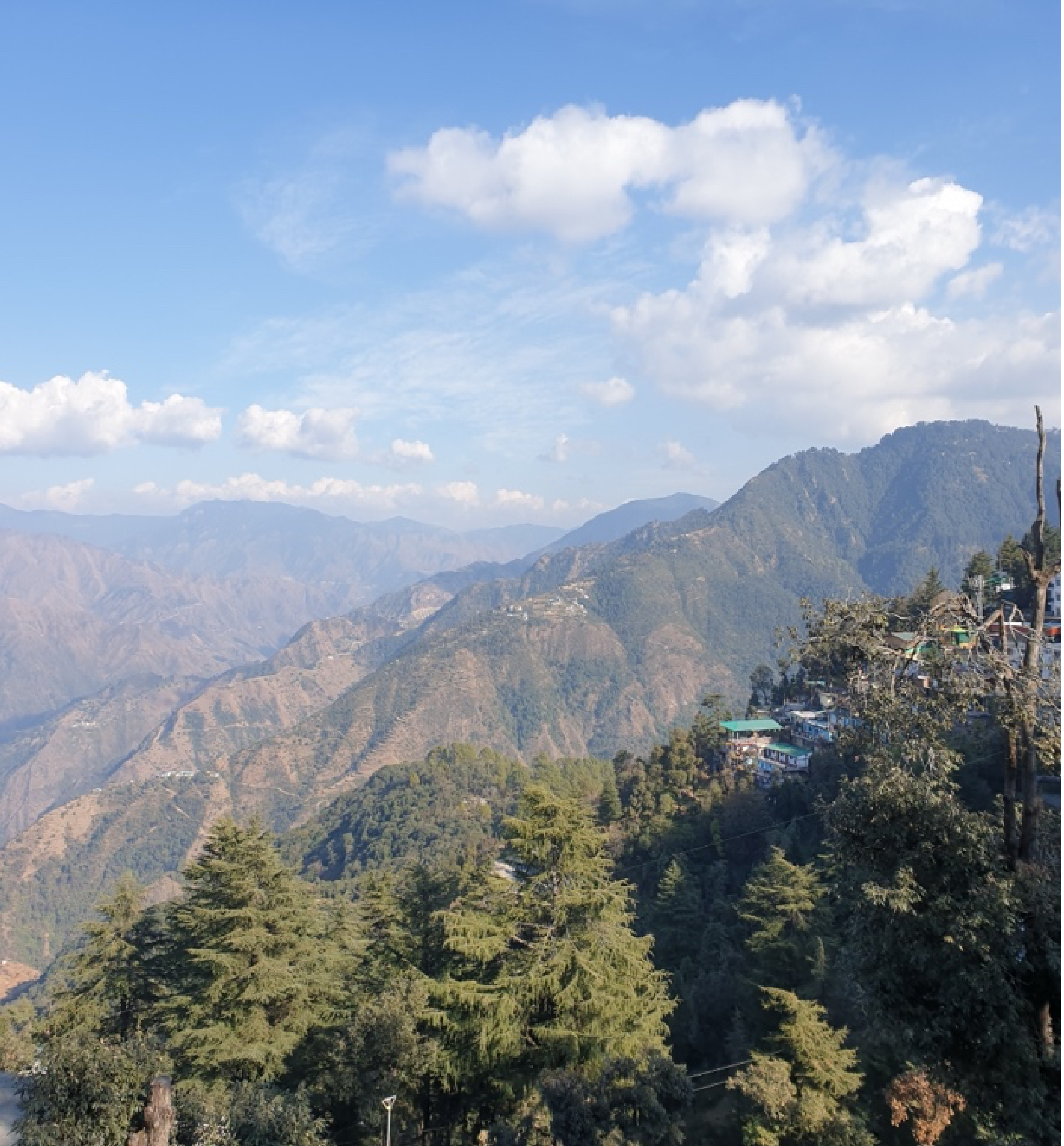
In remote and difficult access stretches of high altitude Himalayas, why do we need a DRR model that can be operated by the community members? As the harsh winters immobilised the transport and communication networks across the Himalayan mountain range, the need and significance of such system became more evident. The need for a decentralised, self-sufficient system for real-time information on local environment to aid community preparedness in remote villages cut-off from mainstream during extreme weather conditions, was stressed time and again, as the Pragya team struggled to gain access in difficult access areas and the stakeholders braved the harsh winter often well below freezing points to come together for the grassroots workshops. Pragya concluded its last leg of consultative workshops with two consecutive events in Tawang and West Kameng in the Eastern Himalayas. Consultations are underway with national level experts, through to pool in knowledge and good practices regarding community based DRR models and relevant ICT technologies. (Read more about this project)
20 March 2013

18 March 2013
Advocacy to address violence against women
Pragya submitted a written statement for the 57th Session of the Commission on the Status of Women (4-15 March 2013) as a non-governmental organization with special consultative status with UN Economic and Social Council. The document (view here) highlights the concerns regarding violence against women in the Himalayas (South Asia) and in arid and semi-arid lands (sub-Saharan Africa).
14 March 2013
Peer group support for Himalayan women

12 February 2013
Pictorial Embroidery of Chamba Rumals
Chamba – a northwestern district in Himachal Pradesh is particularly famous for its unique and charming embroidered rumals. The word ‘rumal’ means handkerchief, however the Chamba Rumals are not mere handkerchiefs; they play a significant role in various social occasions in the region. This beautiful form of embroidery, done on handspun cloth with silk threads, is greatly inspired by the different pahari paintings (mountain paintings).
 The origin of this art form can be traced back to 17th - 18th century in the former Chamba state. Traditionally, it is a custom to gift these beautifully embroidered rumals as a part of the wedding trousseau. Also, these are used for wrapping gifts or covering gifts, placed on trays and baskets, on special occasions as weddings, festivals or fairs. Hence, wedding scenes is a popular theme in the designs. It was considered an integral part of the dowry without which a wedding ceremony was incomplete. Even today it plays an important part of the wedding trousseau and sometimes it is also used for wrapping gifts and presenting during important social occasions. Men and women wear these beautifully embroidered rumals on their shoulders and the more delicate and intricate designs on the rich cloth are seen as a symbol of status.
Creating a Chamba rumal: The cloth used to make Chamba Rumals is mostly unbleached cotton (khaddar) or fine muslin cloth, which is off-white in color; the light-coloured off-white base is important for highlighting the vibrant silk threads used in the embroidery. The artist first visualizes the theme and draws the initial outline of the design with charcoal on the cloth. During this stage the artist also decides the colors that will be used for filling up the designs. The actual embroidery is done by the womenfolk who follow the outlines drawn by the miniature artist.
The designs used are highly inspired by the miniature pahari paintings and consist of vibrant motifs and designs, which include birds, animals, decorative plants and flowers that form an important part of this visual handicraft. The designs and motifs are carefully laid down to form beautiful compositions, which are then filled in with untwisted silk threads, also called ‘pat’. The commonly used colors in a Chamba rumal are purple, bright pink, carmine, deep red, orange, brown, shades of green, yellow, blue along with black and white. In some of the old rumals, silver wire or ‘tilla’ can also be found.
One of the unique features of the Chamba rumals is that the design can be viewed from both sides and there is no backside. For this a unique form of stitching, the ‘do-rukha’ or the double-satin stitch is mainly used. It is usually not found in other forms of traditional Indian embroidery; the ‘do-rukha’ or the double-satin stitch gives an even finish on both sides with no visible knots. A simple stitch with a black silk thread, the ‘dandi tanka’ or the stem stitch is finally used to outline the designs. This is characteristic of the Chamba rumal embroidery. An important part of the pahari painting is the fine black outline; similarly the black silk thread is used in the embroidery to give the effect of a pahari painting. Apart from these, other form of stitches like the buttonhole stitch, cross-stitch, long and short stitch, herring bone stitch along with pattern darning is also used. The result is a flat and smooth finish that gives the embroidery the look of a miniature painting.
This art form emulates the creative expressions and the innermost feelings of the womenfolk in Chamba. This magnificent art and the skill associated with it is slowly fading away and efforts are being made to re-examine their marketing strategy and new markets and methods of distribution, in an effort to promote the artistic, social and cultural worth of this art and revive the culture.
Creating a Chamba rumal: The cloth used to make Chamba Rumals is mostly unbleached cotton (khaddar) or fine muslin cloth, which is off-white in color; the light-coloured off-white base is important for highlighting the vibrant silk threads used in the embroidery. The artist first visualizes the theme and draws the initial outline of the design with charcoal on the cloth. During this stage the artist also decides the colors that will be used for filling up the designs. The actual embroidery is done by the womenfolk who follow the outlines drawn by the miniature artist.
The designs used are highly inspired by the miniature pahari paintings and consist of vibrant motifs and designs, which include birds, animals, decorative plants and flowers that form an important part of this visual handicraft. The designs and motifs are carefully laid down to form beautiful compositions, which are then filled in with untwisted silk threads, also called ‘pat’. The commonly used colors in a Chamba rumal are purple, bright pink, carmine, deep red, orange, brown, shades of green, yellow, blue along with black and white. In some of the old rumals, silver wire or ‘tilla’ can also be found.
One of the unique features of the Chamba rumals is that the design can be viewed from both sides and there is no backside. For this a unique form of stitching, the ‘do-rukha’ or the double-satin stitch is mainly used. It is usually not found in other forms of traditional Indian embroidery; the ‘do-rukha’ or the double-satin stitch gives an even finish on both sides with no visible knots. A simple stitch with a black silk thread, the ‘dandi tanka’ or the stem stitch is finally used to outline the designs. This is characteristic of the Chamba rumal embroidery. An important part of the pahari painting is the fine black outline; similarly the black silk thread is used in the embroidery to give the effect of a pahari painting. Apart from these, other form of stitches like the buttonhole stitch, cross-stitch, long and short stitch, herring bone stitch along with pattern darning is also used. The result is a flat and smooth finish that gives the embroidery the look of a miniature painting.
This art form emulates the creative expressions and the innermost feelings of the womenfolk in Chamba. This magnificent art and the skill associated with it is slowly fading away and efforts are being made to re-examine their marketing strategy and new markets and methods of distribution, in an effort to promote the artistic, social and cultural worth of this art and revive the culture.
31 January 2013
Health camp in Urgam Valley
As part of its healthcare initiatives in remote high altitude villages, Pragya conducted health camps today in collaboration with doctors from Civil Hospital at Layari and Aroshi villages of Urgam valley, benefitting over 140 individuals. The initiative is striving to address the critical need for reproductive healthcare for women in the Himalayan region and improving healthcare access in remote villages.
17 January 2013
The Fascinating Cave Temples of Ladakh

Here are some of the cave temples that one can find in these regions:
The twin crags of Spituk
Locally known as Brag-khung Kha-ba-chen (snowy hole in the Crags), white – walled buildings on the left bank of the Indus shelter the two caves, near Spituk. The walls of one cave are completely covered with soot and the solitary recognizable part of a mural is a corner of a mandala (a spiritual symbol representing the universe) on the back wall. In the second cave it is easier to recognize the murals. Three mandalas with decorative motifs and several miniature divinities are clearly visible.
Hemis Shugpa in Basgo
Hemis Shugpa, named after the juniper trees that grow there, is situated in a narrow valley lying along the ancient track towards the north leading from Basgo to sTing-mo-sgang through a narrow gorge. The caves along the mountain ridges offer a splendid view of the Indus valley. There are two stucco images of Naropa and Padmasambhava. There are two chortens (stupas) below the cave and a juniper tree, which is believed to be inhabited by a serpent deity.
The Pentad of Saspol
A group of caves are situated above the village - Saspol near the ruins of an old fort. Among the group of caves, the first is dominated by a mural of Sãkyamuni, repainted in unskilled hand in later years. The cave also contains other murals of Sãkyamuni, Avalokitesvara, Akshobhya and Vajradhara, miniatures of a thousand Buddhas and two large murals of Padamasambhava and Maitreya. The second temple has murals of Sãkyamuni and ElevenHeaded Avalokitesvara, of Tsong-kha-pa and five Buddhas. The third cave is the largest in size. The murals are in good condition and represent a variety of divinities. The main murals are of Bodhisattvas, Vajrapani, Amitãbha, Avalokitesvara, Atisa, Chos-kyi-skyabs, and many others. The fourth and fifth temples have murals of preaching Buddha and mandalas but are gradually disappearing as the loose moraines are sliding down hill. The caves are completely open and the murals can hardly be recognized.
Other wonders
Phokar Dzong is situated in a wide valley surrounded by mountain peaks near village Shargola.
Wakha cave temple is situated in a crag above the village with a steep flight of steps leading to the cave. Inside the cave there are block prints of Tibetan canon and images of Avalokiteswara, Sakyamuni and Tsong-kha-pa.
There is a small cave containing images of Tillopa, Naropa and Mi-la ras-pa. According to legend, monk Naropa meditated in this cave and he dried the whole valley, which was a great lake, before founding the monastery.
Go-tsang-pa cave in Hemis is a small cave at the top of a gorge that lies behind the monastery. There are five images inside the cave along with a beautiful mural depicting a hunting scene from the life of Mi-la ras-pa. The walls near the entrance have murals of Mahakala and Remati, a female deity.
Near Nimmo, there is a boulder with a cavity resembling the shape of a human body. According to local legend, this was formed when Guru Rinpoche or Padmasambhava clung to the rock as he was pursued by a demon during his journey through Ladakh. However, it has become a religious site for the Sikhs.
The Spectacular Rock Carvings
Rock carvings around Ladakh provide an interesting area of study of the local cultural history. The rock carvings are of three types: simple drawings of men and animals, pictures of chortens and written inscriptions. They are found in river terraces near Saspol, Alchi, Khaltse, Nurla, between Leh to Nimmo, also across the Khardung-La pass where Nubra and Shyok rivers meet.
The figures engraved include the usual humans and animals (ibexes, goats, deer) and are presumed to be from pre-Buddhist era. The temple of Alchi has inscriptions in “dbu-can” script. The engravings near Tirith village, are astounding as they are not merely drawings and the themes go beyond commonplace. These are on a rock on the left bank of the Nubra. The carved deities are still clearly discernable, with most of their details intact. One of them has a sword and the second, a rosary.
Unfortunately, in some cases, physical damage from weathering and lack of maintenance has fragmented the texts and sometimes the writers' mode of expression is too oblique to understand the details. The rocks are deeply inscribed to distinguish the drawings or letterings by relief, or scratched away to reveal the letters against the contrasting surface colour of the rocks.
The twin crags of Spituk
Locally known as Brag-khung Kha-ba-chen (snowy hole in the Crags), white – walled buildings on the left bank of the Indus shelter the two caves, near Spituk. The walls of one cave are completely covered with soot and the solitary recognizable part of a mural is a corner of a mandala (a spiritual symbol representing the universe) on the back wall. In the second cave it is easier to recognize the murals. Three mandalas with decorative motifs and several miniature divinities are clearly visible.
Hemis Shugpa in Basgo
Hemis Shugpa, named after the juniper trees that grow there, is situated in a narrow valley lying along the ancient track towards the north leading from Basgo to sTing-mo-sgang through a narrow gorge. The caves along the mountain ridges offer a splendid view of the Indus valley. There are two stucco images of Naropa and Padmasambhava. There are two chortens (stupas) below the cave and a juniper tree, which is believed to be inhabited by a serpent deity.
The Pentad of Saspol
A group of caves are situated above the village - Saspol near the ruins of an old fort. Among the group of caves, the first is dominated by a mural of Sãkyamuni, repainted in unskilled hand in later years. The cave also contains other murals of Sãkyamuni, Avalokitesvara, Akshobhya and Vajradhara, miniatures of a thousand Buddhas and two large murals of Padamasambhava and Maitreya. The second temple has murals of Sãkyamuni and ElevenHeaded Avalokitesvara, of Tsong-kha-pa and five Buddhas. The third cave is the largest in size. The murals are in good condition and represent a variety of divinities. The main murals are of Bodhisattvas, Vajrapani, Amitãbha, Avalokitesvara, Atisa, Chos-kyi-skyabs, and many others. The fourth and fifth temples have murals of preaching Buddha and mandalas but are gradually disappearing as the loose moraines are sliding down hill. The caves are completely open and the murals can hardly be recognized.
Other wonders
Phokar Dzong is situated in a wide valley surrounded by mountain peaks near village Shargola.
Wakha cave temple is situated in a crag above the village with a steep flight of steps leading to the cave. Inside the cave there are block prints of Tibetan canon and images of Avalokiteswara, Sakyamuni and Tsong-kha-pa.
There is a small cave containing images of Tillopa, Naropa and Mi-la ras-pa. According to legend, monk Naropa meditated in this cave and he dried the whole valley, which was a great lake, before founding the monastery.
Go-tsang-pa cave in Hemis is a small cave at the top of a gorge that lies behind the monastery. There are five images inside the cave along with a beautiful mural depicting a hunting scene from the life of Mi-la ras-pa. The walls near the entrance have murals of Mahakala and Remati, a female deity.
Near Nimmo, there is a boulder with a cavity resembling the shape of a human body. According to local legend, this was formed when Guru Rinpoche or Padmasambhava clung to the rock as he was pursued by a demon during his journey through Ladakh. However, it has become a religious site for the Sikhs.
The Spectacular Rock Carvings
Rock carvings around Ladakh provide an interesting area of study of the local cultural history. The rock carvings are of three types: simple drawings of men and animals, pictures of chortens and written inscriptions. They are found in river terraces near Saspol, Alchi, Khaltse, Nurla, between Leh to Nimmo, also across the Khardung-La pass where Nubra and Shyok rivers meet.
The figures engraved include the usual humans and animals (ibexes, goats, deer) and are presumed to be from pre-Buddhist era. The temple of Alchi has inscriptions in “dbu-can” script. The engravings near Tirith village, are astounding as they are not merely drawings and the themes go beyond commonplace. These are on a rock on the left bank of the Nubra. The carved deities are still clearly discernable, with most of their details intact. One of them has a sword and the second, a rosary.
Unfortunately, in some cases, physical damage from weathering and lack of maintenance has fragmented the texts and sometimes the writers' mode of expression is too oblique to understand the details. The rocks are deeply inscribed to distinguish the drawings or letterings by relief, or scratched away to reveal the letters against the contrasting surface colour of the rocks.
23 December 2012
Kesar Saga - An Epic from the Himalayas

The Saga exists in oral form throughout central Asia, from Mongolia to Ladakh. Different forms exist in different regions, and Ladakh is no exception. Kargil District in particular is said to be home to some of the most highly developed versions of the work.
The Kesar Saga is traditionally heard in oral performance, a feature in common with epic traditions around the world. In the winter months, most parts of Ladakh are closed off from the outside world. Even internally within the districts, movement between villages can be difficult or impossible, and conditions mean that little in the way of outdoor work can be done during the winter. Consequently, entertainment forms a larger part of life in winter than in summer, and one major form of this is oral recitation. Ladakh has tribes like the Mon and the Beda who, though debarred traditionally from many other professions, were in great demand as musicians. The position of the musician then, while not necessarily privileged, was highly specialised, indicating the importance of music in these communities. There are stories of famous epic singers performing the Kesar Saga over a number of weeks, and this kind of recitation (always from memory) must have required very specialised skills. Telling the Saga still involves lengthy sessions, sometimes with dances and re-enactments that are associated with particular scenes, and which surely bring to an even more personal level a story already strongly connected to community life.
In addition to professional performances, music forms an important part of everyone’s life in rural Kargil, and this can make another connection to the epic. Garu songs, sung in Kargil whilst ploughing fields, include verses that are attributed to the Kesar Saga. It seems likely not only that everyone growing up in rural Kargil will have heard the Kesar Saga, but that they will know some of it themselves.
As with many ancient stories throughout the world, the Saga has a central character who is royal, and encounters difficulties in gaining his rightful position and who in the end wins, with the forces of good on his side. The epic identified with Tibet does not reduce its cultural relevance to the people of Ladakh, as international boundaries in the region have always been – and remain fairly – fluid and disputable, whereas the Tibetan cultural influence on Ladakh is firm.
Kesar’s birth is miraculous (it is mediated by the gods, and he is himself part divine), and he achieves great feats as a child. In this he is a typical hero, but the context in which he is set is unmistakeably Himalayan. Beyond the content of the poem itself, the mode of transmission – oral recitation in a village context – binds Kesar and the stories about him to the homeland of those who hear them as children.
King Kesar is a fantastical figure, and many of his exploits are brought about by magic. Sometimes, though, his means are more recognisable to us today. On his way to kill the King of Hor, he uses his cunning skills to overcome a group of enemies:
Then Kesar arrived at a place where nine bridges were tied together, and where 100 soldiers of Hor had to keep watch. Kesar took the shape of a young lama, and caused much rain to fall. He made friends with the soldiers and built a house for them, the roof of which rested on a single post. One night when much rain fell, he tied a silken cord to the post, went outside, and tore the post done. All the soldiers were slain by the falling roof.
As well as showing divine power, Kesar is also an embodiment of divine rightness. Even his wife ‘aBrugma is not spared punishment after she refuses to bear children for Kesar, following the death of the King of Hor. But when justice has been done, she is restored to her rightful place:
Now she was punished in the following way: from the land of the dwarves to Ling she was tied to the tail of the horse and dragged along; then she had to be everybody’s servant for three years; for three years lucerne [alfalfa] was sown on her head and ploughed with Dzos; for three tears she had to serve in the castle with leather round her knees; for three years she had to tend stone-partridges; and for three years she had to milk the senting-bird. In this way fifteen years elapsed. Then one year was required to repair the castle at Ling. Now ’aBrugma was made a lady again. The wedding lasted three days and three nights, and they lived in perfect happiness.
Subscribe to:
Posts (Atom)
When Old Patterns Stop Making Sense: Shifts in Western Himalayan Plant Assemblages, 2020-2024 by Sudipto Majumdar, Pragya T...
-
 The Kesar Saga poem is an eleventh-century Tibetan epic about Kesar, the King of Ling. The story became the national epic of Ladakh, and ...
 -
When Old Patterns Stop Making Sense: Shifts in Western Himalayan Plant Assemblages, 2020-2024 by Sudipto Majumdar, Pragya T...
-
 Nilima Das has been working as a mentor (Missamari village, Sonitpur, Assam) to empower women and to sensitise all stakeholders in the ...
