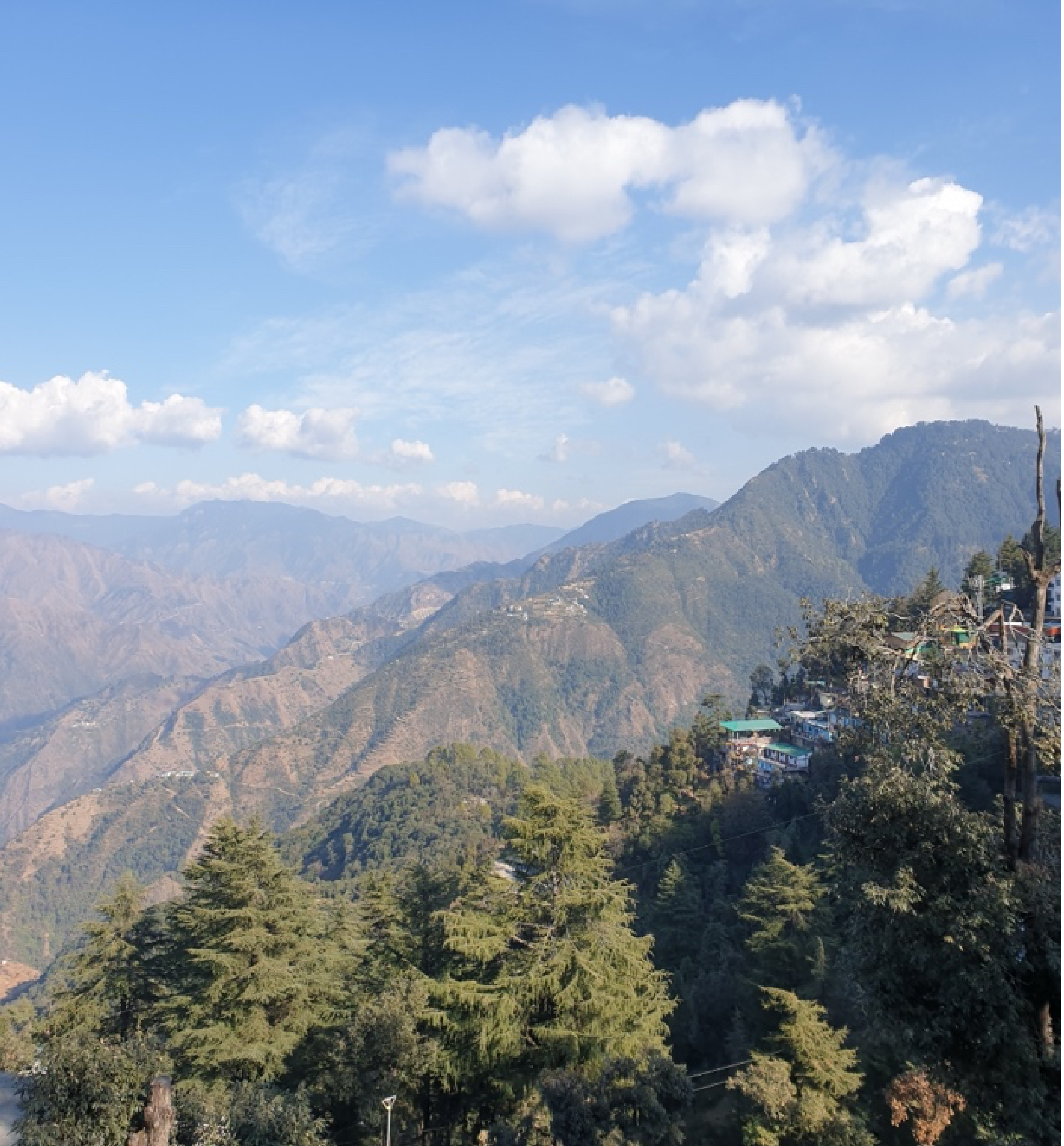
From the onset of its relief operations for the flood affected Himalayan districts in June 2013, Pragya staff has been involved in carrying out area specific need assessments, which helped in formulation of effective rehabilitation strategies with inputs from key stakeholders. Pragya is in the midst of implementing its rehabilitation plan in the four affected districts viz. Rudraprayag, Pithoragarh, Chamoli and Uttarkashi. The interventions are spread across various sectors to reinstate people most affected by the floods. Click here for more on Pragya's work related to flood rehabilitation in Uttarakhand.
Meeting the development needs of marginalised people in some of the remotest areas of the world.
31 January 2014
Rehabilitation work for flood hit Himalayan villages
27 January 2014
Call for papers on Gender, Governance and Agriculture
Abstracts are invited for a special issue of International Journal of Agricultural Resources, Governance and Ecology. Last date for submission of abstracts is: 28th February 2014. Guest Editor for this issue: Gargi Banerji, Pragya. Once shortlisted, the full papers would be due by 30th April 2014. (View the full announcement)
23 January 2014
Cultivation packages for Kenyan farmers
As part of its initiative to conserve and ensure the sustainable utilisation of the medicinal & aromatic plants of East Africa, Pragya Kenya has developed training manuals for cultivation of 6 prioritised medicinal plants and necessary post harvest procedures. Training manual and awareness pamphlets have also been developed in Swaihili language for grassroots conservation planning workshops.
28 December 2013
DEISPI for improving students’ performance
Pragya is piloting DEISPI, a tool to improve learning levels, instructional quality, school infrastructure & management, and educational policy planning.
It generates performance scores for participating schools, teachers, students and target districts based on pre-set performance thresholds and also prescribes remedial actions as required. Teachers, students, school committees recently attended sessions in Uttarkashi as part of the pilot phase across Himalayan district.
20 December 2013
Solar dryers for Himalayan farmers
The farmers of Themgaram and the neighbouring cluster of villages were helped to set up a Solar Dryer as a shared facility to dry their farm produce. These structures are portable and easy to assemble and dismantle. Similar structures are being set up by Pragya across several other Himalayan districts. These sites would also have weather resistant food storage facilities as a comprehensive measure to ensure food security for remote high altitude villages.
28 October 2013
BARC approved filtration technology for flood-affected villages
Addressing the concerns for WASH in post-disaster
scenario, Pragya is carrying out significant work in Uttarakhand, India for
communities that have suffered damage to their water supply and storage systems
or are currently experiencing water stress or those that are identified to be
dependent on contaminated/unsafe water sources for drinking purposes. Pragya is
installing BARC (Bhabha Atomic Research Centre) approved technology for
filtration units comprising activated carbon and 0.01 micron membrane filter
that can remove micro-biological impurities to ensure safe water for these
communities. The membrane life is 3-5 years with 300 ltr/day output at 10 psi
pressure.
(Photographs of Pragya's work in Immediate Relief Phase)
24 September 2013
Innovative health surveillance system for women and infants
As a part of Pragya’s initiative to maternal and neonatal child health (read more), Women’s Care Groups (WCG) have been formed in Himalayan villages. A health & nutrition surveillance program for girls and women has been instituted through these groups. Each group uses the program to watch out for health & nutrition risk signs among the girls and women in the village, take necessary precautions or refer for timely clinical care, provide dietary guidance where required, and liaise with government facilities to access necessary supplements, for example, folic acid supplements for pregnant women.
The groups are equipped with necessary instruments, such as Aneamia detection kits (non-invasive) for haemoglobin monitoring, and trained in the surveillance system; the procedure enables a comparison against norms and ranges for BMI, blood sugar, BP, Hemoglobin, etc., set to high-altitude conditions, for adolescent girls and women. They also collect data on food intake and nutritional levels, with a focus on specific high-altitude deficiencies such as iron, vitamin A, and determine cases of Severe Acute Malnutrition (SAM) and Moderate Acute Malnutrition (MAM).
Subscribe to:
Posts (Atom)
When Old Patterns Stop Making Sense: Shifts in Western Himalayan Plant Assemblages, 2020-2024 by Sudipto Majumdar, Pragya T...
-
The Kesar Saga poem is an eleventh-century Tibetan epic about Kesar, the King of Ling. The story became the national epic of Ladakh, and ...
-
When Old Patterns Stop Making Sense: Shifts in Western Himalayan Plant Assemblages, 2020-2024 by Sudipto Majumdar, Pragya T...
-
Nilima Das has been working as a mentor (Missamari village, Sonitpur, Assam) to empower women and to sensitise all stakeholders in the ...