22 August 2017

Safety gear distribution to migrant construction workers

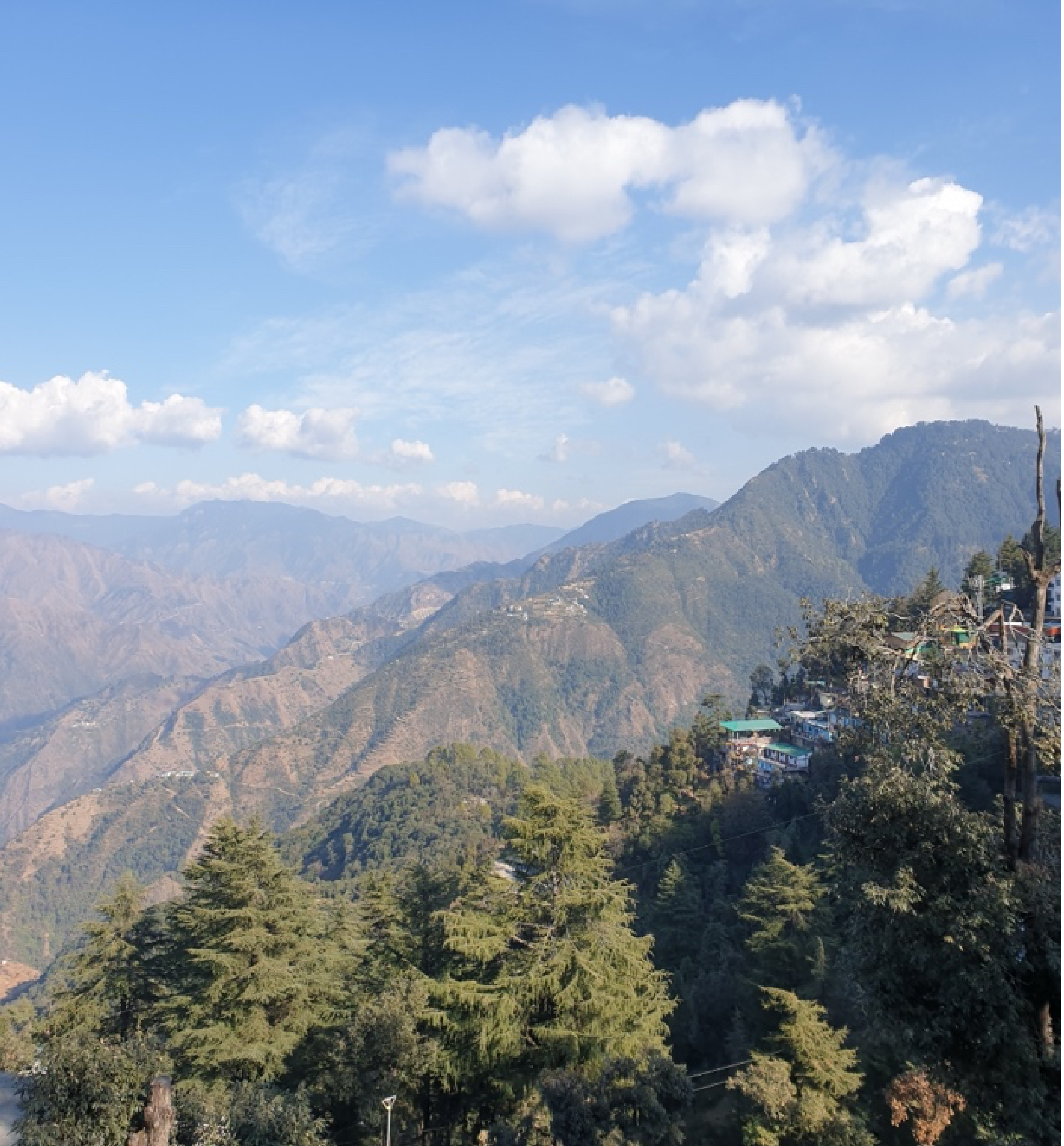
The Himalayan district of Chamoli, Uttrankhand, India is a breathtakingly beautiful place. Over the years it has become a dwelling area for migrants hailing from states like Bihar, Jharkhand and the neighboring country of Nepal.  They carry a lot of hopes and expectations to live a better life for themselves and their family. But unfortunately, safe enabling living conditions to the workers here are limited. They live in shabby, cramped, unsafe homes in unhygienic conditions, and face painfully cold and harsh weather more often than not. To add to this, they often end up working in exploitative and hazardous working conditions.
Migrants working here face more than just the physical strain but are also plagued by a variety of health implications ranging from weakness, back and joint pain to concrete burns, cuts, as well as chronic illnesses such as COPD and TB. While working, they are exposed to dust and asphalt fumes without protective clothing, naturally leading to endemic health issues including eye, heart and lung diseases. The construction workers especially women suffer through skin diseases and infections. At times children are also present at the worksites, who are more vulnerable to catch common illnesses and infections compared to adults. Unfortunately, none of the authorities are interested to hear their health concerns and provide a solution. 


We regularly face sliding rocks and mud. Many times we have suffocation and allied breathing problems due to sudden inhale of mud. To protect from mud we use homemade mask, mainly consisting of handkerchief or piece of cloth. This is insufficient as we feel suffocation after few minutes and remove them afterward. Some of us have reported coughing problems. Doctors at GREF has also advised us to wear the mask and protect from inhaling mud particles.” Says Gulu Marik, 25 years working in Malari Camp.
Pragya did a study of the hazardous work conditions and activities of the migrant workers in Chamoli. It was assessed that workers are not really provided with the necessary equipment while working in risky conditions which makes them vulnerable to various harmful health hazards as mentioned earlier. In view of that, the safety equipment distribution drive was planned, intended to reduce the mal-effects of occupational hazards and to ensure that they are able to protect themselves from other health hazards.
Pragya distributed safety kits and first aid kits to the migrant workers across six camps of migrant workers in Chamoli district of Uttarakhand. The camps covered were in Birajkund, Birahi, Surai Tota, Long, Bhapkund and Malari. The workers were trained on health and hygiene, safety and first aid.
Reaching out to and training 578 migrant workers happened in an organized way. 600 safety kits and 12 first aid kits were distributed. Workers were provided with protective gear that includes vital protective and safety equipment like helmets, gloves, along with the relevant demonstration. The first-aid kit includes the necessary health equipment and medicines in case of an injury and burns. Through a session on health and hygiene workers were made aware of health risks and the role of personal hygiene in preventing certain illnesses. Since dwelling spaces in these areas are unhygienic and open where awareness on these issues becomes a necessity. Hence workers were also informed on the symptoms, preventive and protective measures for diseases like TB and HIV. The workers many a time know the safety rules at a workplace but they seldom adopt it further risking their bodies to injuries.28-year-old Sarita Devi from Biraj Kund camp exclaimed, “We are not provided with any safety instrument while working such as helmets and gloves etc. I work along with other co-workers to remove silts, stones etc. We needed gloves and mask for my husband to protect from dust particle. Special thanks to Pragya to address our concerns, especially for helmets, gloves and masks.”
Knowing that there is a persistent lack of knowledge among migrant workers on the importance of health and access to basic health facilities, a role-play exhibited to equip the workers to be able to use the first aid kits provided to them. They were instructed on ways to stop bleeding, using first aid kit to treat minor injuries, and identifying the injuries that need a medical practitioner’s attention. Injuries related to environment and conditions like frostbite and trench foot, arising from cold and high-altitude conditions, were also given attention. This has helped these migrant workers to be self-dependent in case of health emergencies and prevent in escalating minor health problems to serious health issues.
A positive impact of the training has been seen while people adopting health and safety measures on their own where using safety equipment has become a daily habit among migrant workers in their workplace. Workers were found to be arranging equipment on their own as a ripple effect of the habit created through the project on using safety equipment while working and adopting habits of good health and hygiene in day today life.
Women were seen relieved due to the provision of gloves since earlier they were quite bothered with cooking food with their dirty and contaminated hands. Using gloves in their daily work has ensured the cleanliness and hygiene along with protection of hands from dirt, itching and infections. In Sarita Devi’s words who is 30 years old from Long camp, “During our work, we face multiple issues such as dust, mist and mud from cutting rock. Many times our fingers cut while hammering on rocks. Also, our hands get rough by putting in mixing cement and Portland. We always felt the need of First aid kit to be provided. I would thank Pragya for giving us first aid kit, having more of dressing.”

Although migration is universally a basic human right, safe living and working conditions were just a dream for these people. Pragya made an effort where it was needed most, and enabled a safe and healthy work milieu to these workers in a land where no one knows them. 

9 August 2017

How Agnes' success inspired farmers in Africa to cultivate rare medicinal herbs

Agnes can be seen in her farm
Ms. Agnes Mulimi is a 35-year old mother of four children, living in rural Kenya. She had been practicing farming for 10 years before A Pragya intervention persuaded her to cultivate medicinal plants. In 2013, when Ms. Mulimi received one and half times more money from the cultivation of Ocimum (basil) and Mondia Whitiei (gondolosia) in one acre of land, as compared to that from cultivation of traditional produce, she decided to completely switch over to the cultivation of medicinal plants. Her success is no accident.

In rural Kenya, a majority of the population is dependent on the traditional systems of medicine and locals regularly consult the ‘daktari wa mitishamba’ or traditional healers. This belief in the power of medicinal plants has endured even with the increased access to western medicine. In the streets of Nairobi, the daktaris have set up shops right alongside the doctors who practice ‘western medicine’, vying with them for their patients.

Contrary to popular belief, the traditional medicines are not cheaper than western medicine, and many rare and valuable medicinal plants are foraged from the wild. In the Kakamega rainforest, which is one of the most densely populated rural regions in the world, people from the villages regularly venture into the forest, collecting firewood and other non-timber forest produce, including medicinal plants.


Following the success of Ms. Mulimi, many other farmers in the region have also switched to cultivation of popular herbal species. Their efforts are not only helping them to improve the quality of family’s lives, but also to reduce the impact on rainforests in the region. The farmers can now better feed, clothe, and educate their children, with enough money left over to invest in livestock. For Ms. Mulimi, it is a drastic change from the situation when she struggled to pay for her children’s school fee. “I plan to rent a piece of land to increase the area under cultivation. But more importantly, the children are happy because they can afford to wear shoes to school,” says Ms. Mulimi.

18 July 2017

Earthquake-hit farmers in Nepal rest hope on polyhouses

In 2015, when the 7.8-Magnitude earthquake in Nepal caused extensive damage to infrastructure and livelihoods of its people, many had lost hope that their lives would ever return to normal. Tek Bahadur, a 60-year-old farmer residing in Kubinde Tol village of Sindhupalchok district, was one of them. His son was killed in a bus accident more than five years ago and the only source of income for him was half-an-acre piece of agricultural land that fetched him an annual income of US $450.

Tek Bahadur can be seen working in his polyhouse 
On the morning of April 25, 2015, one of the worst temblors in 80 years for Nepal completely destroyed Bahadur’s house and left the already Below Poverty Line farmer destitute and in need of dire help. The following year, Bahadur came to know that Pragya was initiating the construction of poly houses to enable production of off-season vegetables for the households, under its Rebuilding Rural Nepal program. “For a farmer like me who had lost everything, a proposal to construct a polyhouse in his own land has brought a glimmer of hope,” says Bahadur. He was then encouraged to attend trainings that will impart  technical skills and knowledge to take forward the polyhouses that would be set up by Pragya.

Today, Bahadur treats the set up as his own physical asset for an increased livelihood and is trying his hand at growing both seasonal and off-seasonal vegetables. He and fellow beneficiaries have gained profits by selling the produce in nearby markets.


“Tomatoes, and more tomatoes in my field”

A polyhouse set up in Majhi's field
Kamala Majhi, a 35-year old female farmer in Sindhupalchowk, was another victim left empty handed by the earthquake. “Our house got damaged and utensils were found within the rubbles and we lost all means to make money,” says Majhi who was also a beneficiary of Pragya’s initiative to construct polyhouses in 100 plots, after stringent site and beneficiary assessment for selecting the most needy households.

Majhi has a polyhouse constructed in a rented piece of land where she has sowed some tomato seeds. “I am convinced that tomatoes will have higher yield than other vegetables and I know I will have many tomatoes to sell in the market,” says the farmer.


3 September 2016

Agriculture Research at the grassroots: practices to adapt to climate change.


Gyan Kumari is a farmer from the Dako village in Kinnaur, from the state of Himachal Pradesh, which, along with the state of Kashmir, is famous for its apples. Ms Kumari's family has traditionally derived its income from apple orchards and barley crops, but of late, the there have been drastic changes in her livelihood. “Many apple trees have perished. The treatment we applied to protect these trees after consultation with the horticultural department has also failed” she says. 

The dwindling harvests of fruits can be directly attributed to one major factor: rising temperatures due to climate change. Fruit and Nut trees require a minimum period of cold weather – termed a chilling requirement – after which the fruit-bearing tree will blossom. An insufficient number of 'chilling hours' (essential for fruit and nut trees to break dormancy)  due to  rising temperatures around the globe has had an adverse impact the harvests of the horticultural harvests.  In the states of J & K, Uttarakhand and Himachal Pradesh in the Himalayan region in India, rising temperatures could directly affect the livelihoods of farmers from the states who primarily grow ‘stone fruits’ – apples, peaches, and apricots. 


 As part of a program to help farmers adapt to climate change and adopt 'climate-smart' practices, Pragya has helped the local farmers establish Research and Development (R&D) plots to test the viability of cultivating crops like lettuce, broccoli, celery, asparagus, among others, as an alternative or supplementary crop. The R & D plots provide crucial data about conditions that are essential for an ideal harvest, and allows for experimentation with innovative cultivation and irrigation practices. There is also a decentralized system where the farmers are encouraged to take up the cultivation of various crops, and their  plots serve as a demonstration that various crops can be successfully grown in the harsh climate of the high-altitude regions: an invaluable tool to persuade the local farmers to grow the traditional crops from the plains.

Pragya is working with farmers on the R & D plots in five districts in the Himalayan states of Himachal Pradesh and Uttarakhand in India. 


20 August 2016

World Humanitarian Day 2016: challenges across the globe

The World Humanitarian Summit held in Istanbul, Turkey in May earlier this year brought together politicians, civil society groups and aid organizations to address the challenges that the global humanitarian agencies face. The Secretary General of the United Nations, Mr Ban Ki-moon structured the summit around five key agendas: “ending conflict; respecting the rules of war; leaving no one behind on the sustainable development agenda; working differently to end need, and investing in humanity.” The summit comes at a time when the wide displacement of people due to conflicts in Syria, Yemen and Iraq, has led to a global refugee crisis, and has become a contentious issue in the politics of the Global North. Equally worrying is the targeting of aid workers in conflict regions, in direct contravention of the International Humanitarian Law.

In other parts in the world, large-scale disasters are are increasingly complicit with a volatile regime of climate change. A prolonged drought in Central India leading to a water crisis and subsequent farmer suicides was immediately followed by large-scale flooding in the North India, primarily the states of Assam and Bihar, with over 4.2 million people affected. In June, heavy rains in the mountain regions of Uttarakhand and Himachal Pradesh in India caused entire villages to be washed away.


When taken as a whole, the picture of the humanitarian crisis that emerges is of large-scale displacement due to political conflicts and war, and the incipient humanitarian crisis of developing countries that are increasingly affected by disasters and climate change. Yet, in the vitiated political discourse and the partisan response to the global refugee crisis, it is the poor, marginalized, and vulnerable sections of society - women, children, tribal communities - that are most affected. Across the globe, international organizations face challenges in responding to crises, whose roots are often political in nature, and the inability to deal with events that transcend national boundaries. A divided response from the global community in the face of any humanitarian crisis, whether caused by political conflicts or natural disasters, denies the shared humanity and the common kinship that people share with each other.


  When Old Patterns Stop Making Sense: Shifts in Western Himalayan Plant Assemblages, 2020-2024 by Sudipto Majumdar, Pragya T...